I went to Japan with a list in my head that I never actually wrote down. Ichiran ramen, the bamboo forest, the scramble crossing, you know the ones everybody shows you before you go.
Some of it was wonderful. Some of it, honestly, was not. And I noticed that a lot of the good moments came from places that were not on my list at all.
So here is my honest version. Your taste may be completely different from mine, and that is kind of the point. (If you want the rest of the trip, the flight that got cancelled the day before and the things in Japan that just worked are already up.)
The food everyone talks about
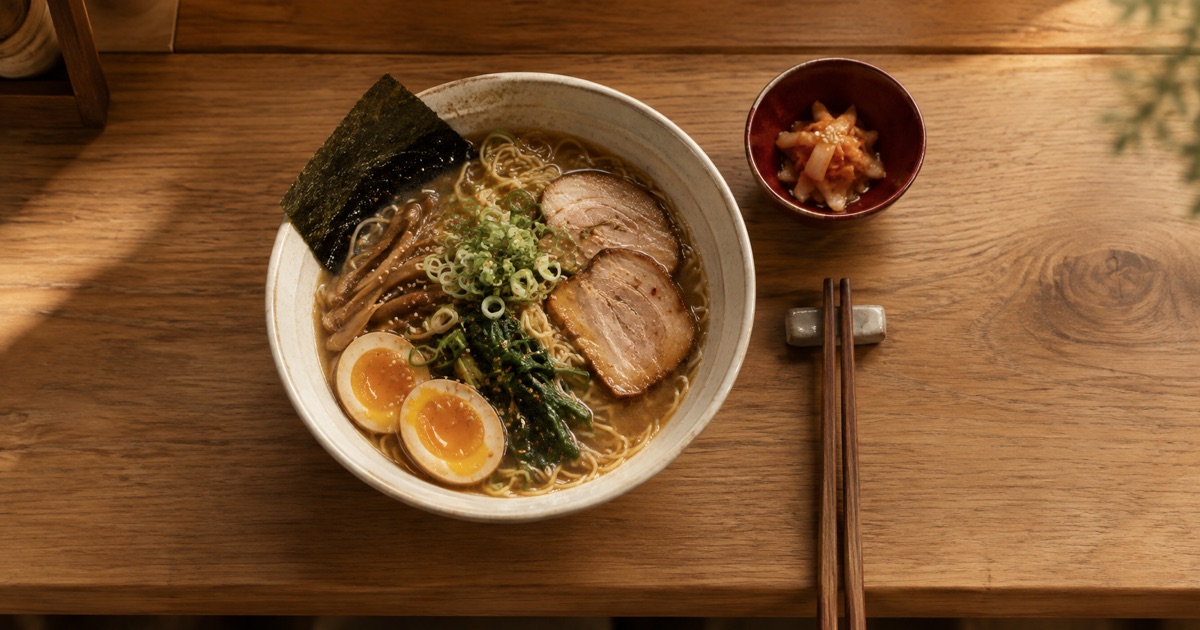
Let me start with the one that will annoy people. Ichiran ramen: not bad, but not good either. It is the famous chain with the individual booths, on every must-eat list for Tokyo. I ate it, I finished it, and I walked out feeling nothing. A perfectly fine bowl of noodles that I would never travel for.
Japanese KFC was worse. I had read for years that it is a different thing over there, better, almost an event. What I got was very salty chicken with no sauce at all. I was still being disappointed when I was already full of salt.
And the one that surprised me most: cold soba. Every guide recommends it as the light, refreshing summer food, which is exactly what I wanted by that point. I had a bowl with tempura just outside Nakameguro for 840 yen. It tasted of almost nothing. The subtle buckwheat flavour people write about did not land for me at all, sorry. It was just carbs.
Which brings me to something nobody warned me about.
Food fatigue is real
By day three or four, everything started tasting the same to me. Rich, salty, a bit heavy, all in the same direction. At one point the thought of another Japanese meal made me slightly sick, and I ended one whole day having eaten almost nothing except a small beef udon.
If you go for more than a few days, plan for this. What worked for me was simple: eat something that is not Japanese. One evening in Tokyo I gave up and had a bowl of pho, and it reset my whole palate. The next day I could enjoy Japanese food again.
I also over-ordered at a Korean place in Harajuku, badly, and had to leave four pieces of chicken behind. I still feel a bit guilty about that. The portions were bigger than I expected in a country I had imagined as small and delicate.
The heat decided everything
I went in late July, and I need to be honest about what that means. It was around 34 degrees with heavy humidity, every single day.
Fushimi Inari, the shrine with thousands of orange gates, is supposed to be best at dawn, cool and empty. I went at half past twelve, exactly what you are told not to do. It was hot and busy, but it was completely fine. I did not walk all the way to the top, but I got a good way up and I am glad I went. So if the dawn version does not fit your trip, go anyway.
The bamboo forest in Arashiyama is genuinely beautiful and I could barely enjoy it because of the heat. That one really does deserve the early morning advice.
Asakusa and its big temple were lovely, but the sun won again. I finished my whole morning plan by twenty to two and retreated somewhere with air conditioning.
I think the lesson was this: in a Japanese summer I should have planned a rhythm instead of a day. Out early, indoors in the middle, out again in the evening. Every time I fought that, I lost.
Two more heat notes. The Skytree was sold out, no tickets to go up at all, so book in advance in summer. The shopping complex at its base was a very good air conditioned refuge though. And the famous onsen (hot spring bath) was too hot for me. They run at around 40 to 43 degrees, which is not a gentle warm bath. Short dips, look for the cold tap, and do not force it just because you paid.
The city that looked wrong until it got dark
I stayed in Shinjuku, and my first impression, walking around in the early afternoon, was: this is not what I was promised. It looked worn and old, a working district, a bit tired. Nothing like the neon from every poster.
Then it got dark and it was a completely different city. Loud, glowing, exactly the Tokyo I had pictured. Same streets, same buildings. So do not judge Shinjuku in the daytime.
And while I am confessing: the famous scramble crossing is in Shibuya, not Shinjuku. Different places, a short train ride apart. I sorted that out eventually and went in the evening, when it looks like the pictures.
The weekend crowd problem
Two places defeated me, for the same reason both times.
Mitsukoshi in Ginza, a beautiful department store, was so packed on a weekend that I could barely move. I went straight to a cafe on an upper floor of another shop nearby and did not even look at the products.
The Pokémon Center in Shibuya was worse. The other big branch happened to be closed that day, which probably pushed everyone into this one, and it was too crowded to browse or find anything I wanted. I left with nothing.
Boring but true: if you actually want to shop in Tokyo, go on a weekday morning.
The quiet ones that did live up to it
Now the good news, because it was a wonderful trip and I don’t want the complaints to run away with it.
The Starbucks Reserve Roastery in Nakameguro was the biggest surprise of the trip. I am not really a Starbucks person, I went mostly out of curiosity. The building is stunning, the coffee was genuinely good and nothing like normal Starbucks, and it is full of nice things you can’t get elsewhere. I even found the tea mug I had been hunting for the entire trip, after failing everywhere else. A hyped place that earned it.
The Muji flagship in Ginza was the opposite of the packed department store: calm, spacious, well priced, and I came away with good things.
The traditional inn in the mountains was the best decision of the whole itinerary, and not because of the hot spring (see above, too hot for me, haha). It was the included meals. Massive, multi course, so much food that I could not finish it. It was also the one night I actually rested.
And one thing I did not plan at all: a ninety minute foot and body massage in Shinjuku, booked purely because I had hours to kill before check-in. Those walk-in places are everywhere and inexpensive, and after days of walking in that heat it was the best money I spent.
What I would tell myself before going
The famous thing is not always the good thing. Some of it is famous because it really is great, and some of it is famous because it is easy to photograph.
My best moments were a mug in a coffee roastery, a massage I booked because I was bored, and a big dinner in a mountain inn. None of them were on my list. So make the list anyway, but don’t be surprised if half of it doesn’t survive the trip.
Have you been somewhere famous that completely underwhelmed you? Or found your favourite thing by accident? Tell me, I love those stories.