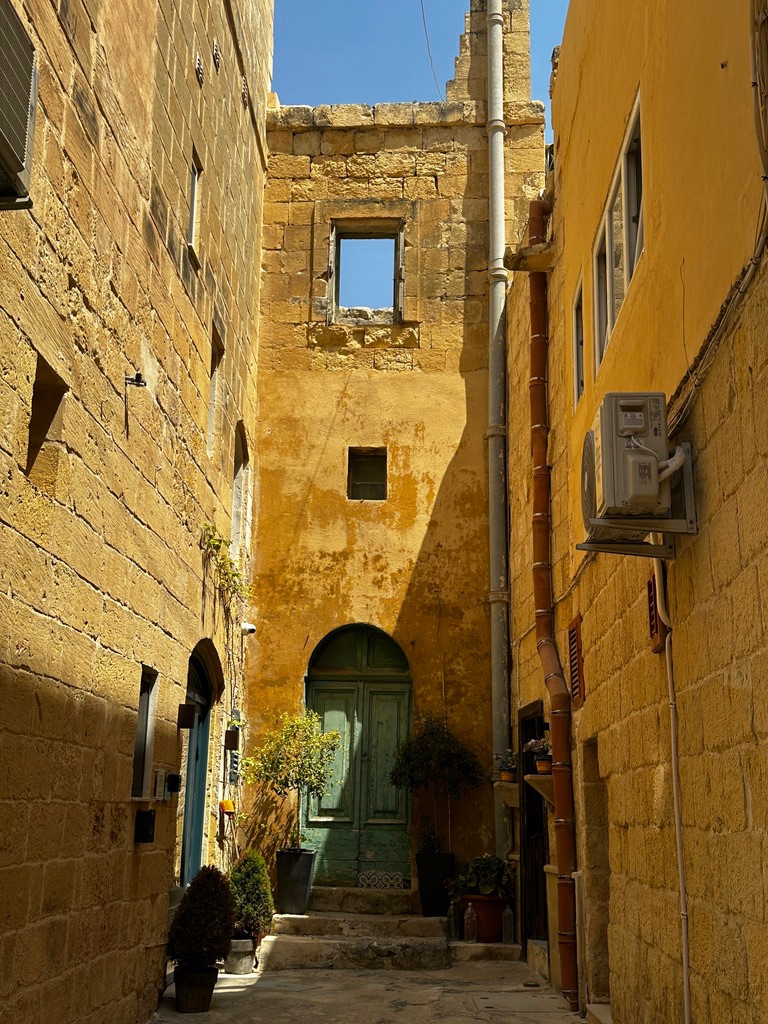
The first thing that hit me in Malta was the view, and it did not look like anywhere I had been before. The colour was mostly a yellow brown, which I think comes from the soil and the limestone. And everything looked a bit unfinished, almost like a ruin, but not in a negative way. I thought it was beautiful and interesting, in a way I could not quite explain.
I had booked the trip on a whim. The flight was booked on 30 July and I flew on 5 August, which for me is almost reckless planning. Sometimes that is the best kind of trip: no months of expectations to live up to, just go.
I came home with a genuinely good week behind me, and one complaint so consistent that it became the theme of the whole holiday. So let me start with that, because it is the thing I wish someone had told me.
There is no shade in Malta
I am not exaggerating for effect. There are barely any big trees anywhere. You walk, and there is sun. You wait for a bus, and there is sun. You arrive somewhere beautiful, and there is sun, and nowhere at all to put yourself for a minute.
I had come from a trip to Japan not long before, which was also brutally hot, but there I could duck into air conditioning constantly. A shop, a station, a café, a shopping centre. Malta in August does not offer that in the same way. You are simply out in it, all day.
Once I accepted that, the trip got better, because I stopped fighting it and started planning around it: outdoor things in the morning, something calm in the worst hours, back out in the evening. The days I ignored that, I regretted it.
So if you are going in high summer, plan your shade the way you plan your meals.
The beaches were not what I hoped for
My other honest disappointment: Malta does not really have beautiful sandy beaches. Or if it does, we never found one.
The coast is mostly rock. Beautiful rock, often dramatic, with clear water, but rock. I had pictured soft sand and did not get it anywhere on the island. Even Ramla Bay on Gozo, which is the one everyone points to as the sandy one, has some sand but was still not a proper sand beach by my standard.
That is a matter of taste, not a flaw in the country. But if beaches are your main reason for choosing a destination, know this before you book rather than after.
And a practical warning that comes with the rocks: bring swim shoes. At St Peter’s Pool I got small cuts all over from the limestone, and closed shoes would have prevented every one of them.
The places that were genuinely worth it
Now the good part, because there was a lot of it.
St Peter’s Pool was the best swimming of the trip. It is a natural pool at the tip of a point near the fishing village of Marsaxlokk, a horseshoe of limestone with flat rock platforms to lie on, deep clear water, and ledges that people jump from. There are no facilities at all, so bring your own water and food.
We arrived around one in the afternoon, which was a mistake. The sun was at its highest and the place was packed. Finding a shaded spot was genuinely difficult and we only got one through luck. Go in the morning. The water was clean and the temperature was lovely, and we stayed for hours.
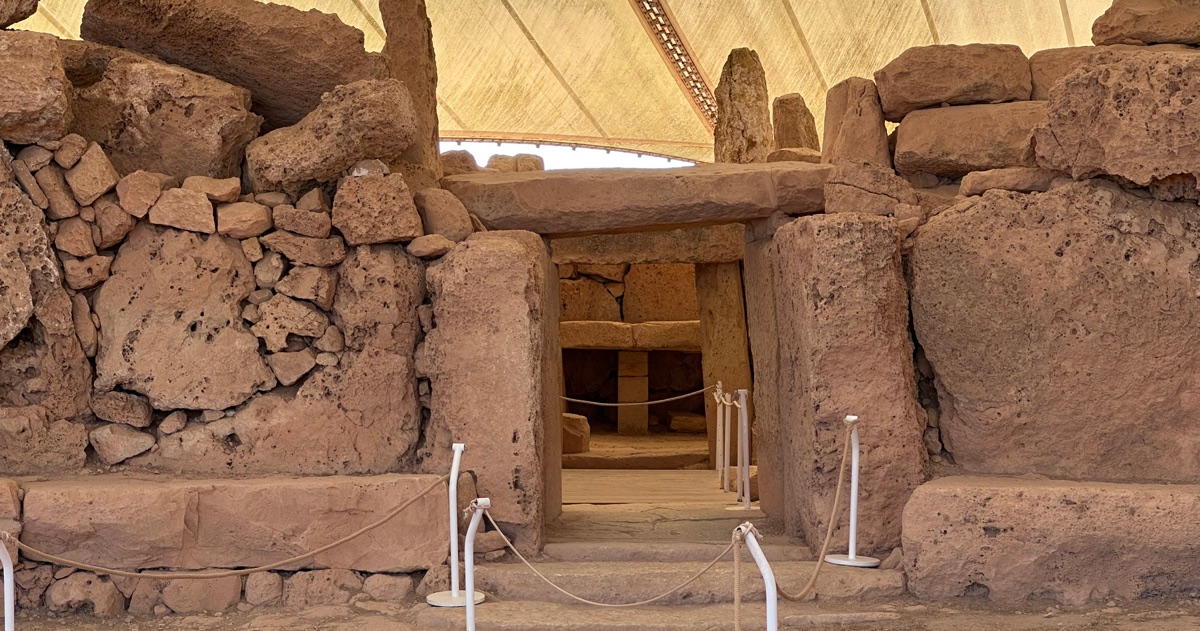
Ħaġar Qim was my favourite thing on the main island, and I did not expect that. It is a megalithic temple complex on the south coast, and the dates are hard to hold in your head: roughly 3600 to 3200 BCE, which makes it older than the pyramids and older than Stonehenge. One ticket of 10 euro per person covers the temples and the museum.
Walking around it was wonderful. The slightly sad part is that they still have not found a good way to preserve the stone. It sits under a large protective canopy and the weathering is still an ongoing problem. Something about standing next to something that has survived more than five thousand years and is now losing a race against the weather stayed with me.
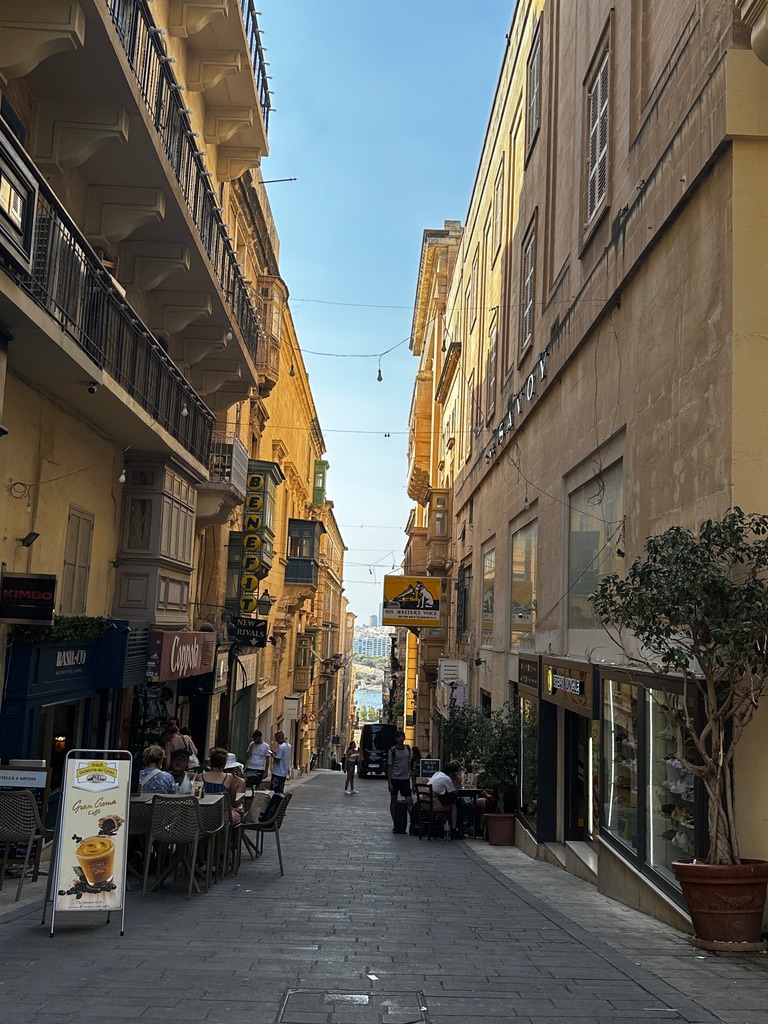
Valletta was lovely to simply wander. It is the capital, a fortified Baroque city built by the Knights of St John in the sixteenth century after the great siege of 1565, and it is tiny, the smallest capital in the EU, but packed with history on a grid of limestone streets. We did nothing ambitious there: coffee, gelato, a snack, a slow walk. We watched the cannon firing at four in the afternoon at the battery below the gardens, a tradition they keep up daily.
Gozo, the second island, made for the best day of the trip. The ferry was cheap, 4.65 euro per person for a return, and the crossing itself was a small pleasure: hot, but with wind, and I fell asleep and arrived before I was ready to wake up. We took a hop-on-hop-off bus around the island, bought at a discount for 15 euro per person from a seller at the ferry terminal. Normally I dislike being approached like that, but we had already researched it and wanted to do it anyway.
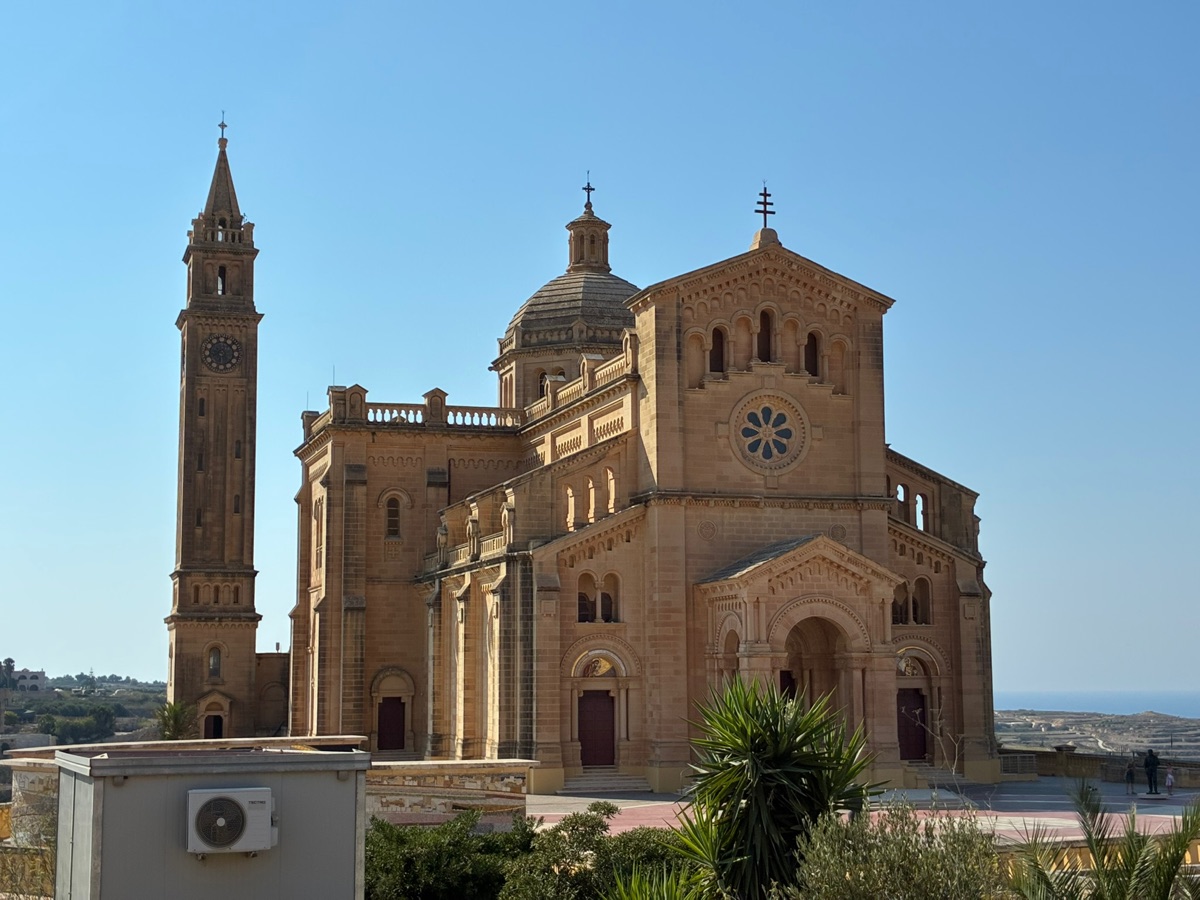
Victoria, the main town, with its churches and its citadel, was worth the time. We also stopped at the Ta’ Pinu basilica, a big golden limestone church standing almost alone among the fields, and it looked striking against the blue sky.
And the roads on Gozo are so narrow that I spent much of the bus ride feeling sorry for the driver.
The two Maltas
We split the week between two very different places, and the contrast turned out to be one of my favourite things about the trip.
St Julian’s, where we stayed the first four nights, is lively to the point of overwhelming. The centre at night was full of extremely young people, so young that I honestly wondered whether some of them were old enough to be drinking, and there was discounted alcohol at every bar. The energy was fun for about an hour and then it was a lot. Maybe I am simply getting old.
Mellieħa, in the north, was the exact opposite. Quiet, sleepy, far fewer shops and services, and after the noise of St Julian’s it felt like a different country. Evening walks, a drink at the town square, cats everywhere. That contrast was probably the best accidental decision of the whole booking.
Popeye Village and the war over sun beds
We spent a day at Popeye Village, the film set turned attraction, about three kilometres from our hotel and a twenty minute bus ride. The ticket was 25 euro per person and included a popcorn and a postcard. We timed our arrival for the parade, which was the right call.
But the real story of that day was the sun beds. There are many of them and they are all free, first come first served. When we arrived, every single one was taken, and every shaded one stayed taken all day. We did not get one until late afternoon when the crowds thinned, and the moment anyone stood up, their bed was occupied within seconds. Ours had almost no shade, and we took it anyway.
Arrive early if you want a decent spot. That is the whole advice.
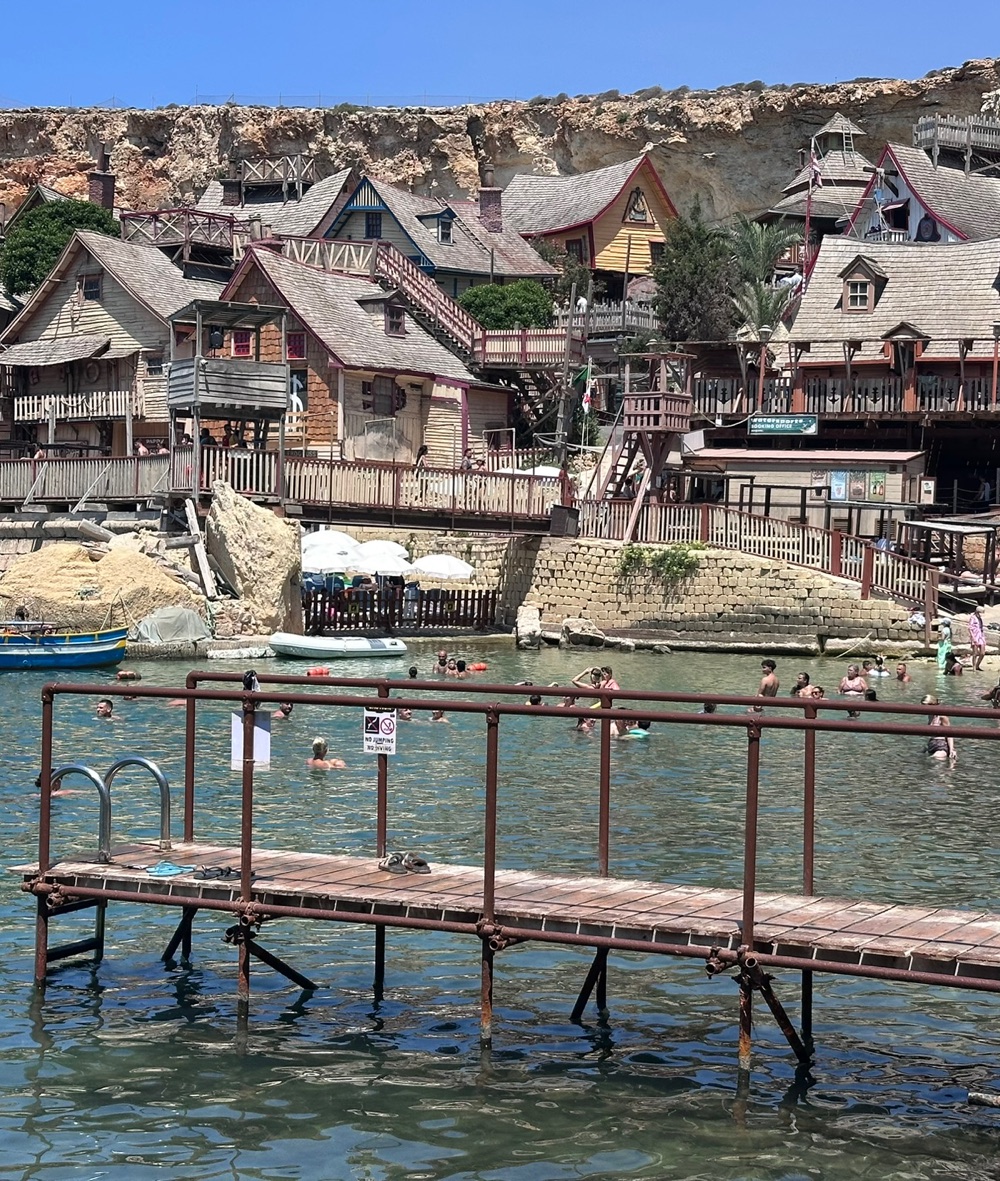
The village itself was fun to wander, with the little houses to walk through and a short film in a small cinema. The beach was fine. The food on site did not appeal to us at all, so eat before or after.
Practical things I would want to know
Getting around eats your day. This was the single biggest practical surprise. Between traffic and a lot of very narrow roads, short distances take a long time. The buses are cheap and fine for relaxed hops, but they are unreliable enough that I would not trust them with anything time sensitive. We used Bolt a lot. From the airport it was 29 euro, and note that Bolt cannot pick you up at Arrivals: there is a dedicated area in the car park directly underneath, down a flight of stairs.
Two moments when everyone leaves at once. After the wine festival at midnight, boarding a bus was impossible, and the Bolt I ordered at exactly midnight took a very long time to arrive. We got back at one in the morning. Same at Popeye Village at closing time. If you are somewhere with a fixed end time, plan the ride home before you need it.
Cards work almost everywhere. I had no cash at all for the whole week and was fine. The one exception was the Blue Grotto boat trip, which is cash only, 10 euro per person.
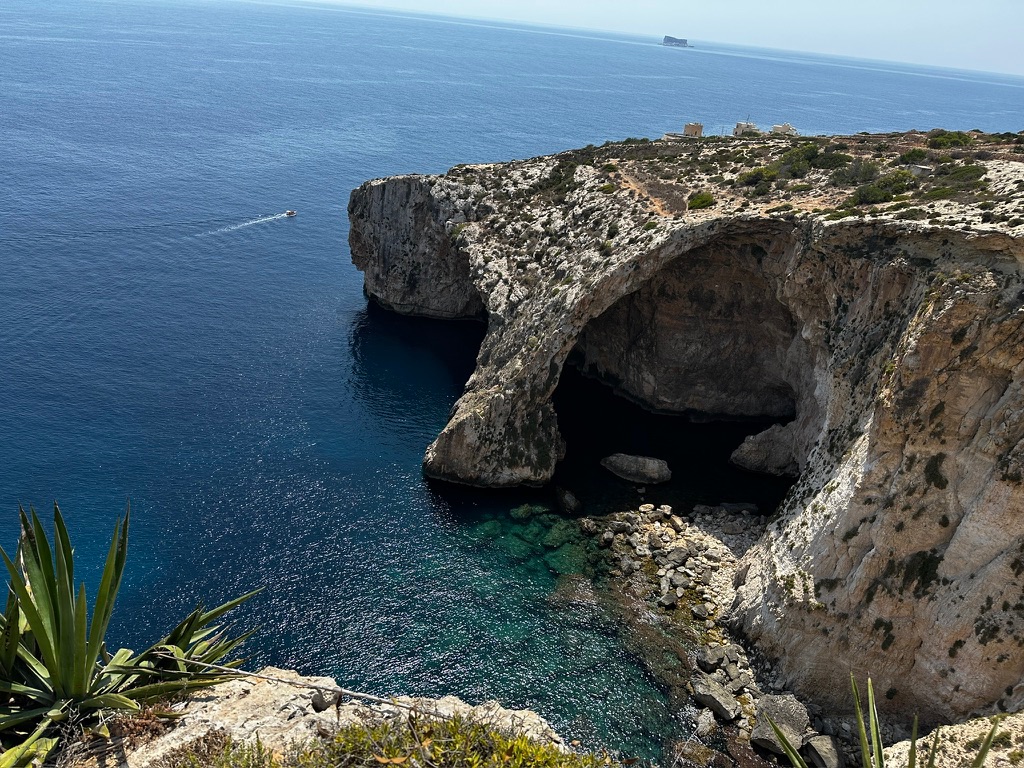
On the Blue Grotto itself: the caves were beautiful, but they did not wow me. I have seen much bigger and more dramatic sea caves elsewhere, so my expectations were unfair. If you have too, the free viewpoint from the cliff might be enough. Go early for better light in the caves.
Beach towels, two systems. Small thing, but it confused me at first. The first hotel logged our room number when we borrowed towels and cleared it when we returned them the same evening. The second gave us a voucher at check-in, which we handed in at the spa in exchange for towels, swapping once a day, and got the voucher and deposit back at the end.
Do not touch prickly pears with bare hands. They grow everywhere and they are edible, and we tried to pick one with no experience whatsoever. The danger is not the big visible spines, it is the glochids, tiny hair-like spines that come off instantly and lodge in your skin. We got them all over our hands, they were uncomfortable, and they took a few days to work their way out. We were so busy pulling them out that we never actually ate the thing.
The casino needs your passport. Neither of us gambles, we went purely for the novelty. They set up an account and gave us cards, we played some slot machines, had a drink and watched other people. Bring ID or you will not get in.
The airport is genuinely difficult in summer. Malta has one airport serving the entire country, and in August it shows. We could not check in online, so everyone queued, and it took a very long time. The building felt small and crowded, uncomfortably so, and we were bussed out to the aircraft rather than using a jet bridge. Leave more time than feels reasonable.
Would I go back?
Yes, but not in summer. I would love to come back in another season, to see what the island looks like when it is not baking. Spring or autumn, when you can stand outside in the middle of the day and the whole place opens up instead of shrinking to whatever patch of shade you can find.
For the history and the towns, definitely. Ħaġar Qim alone was worth the trip, and Gozo deserved more than one day. For beaches, I would not go for those.
A quick word on food, since people always ask: it was generally good, but nothing wow for me. Nothing I would plan a trip around.
If you have been to Malta: did you find shade somewhere I missed, and did you find a proper sandy beach? I would genuinely like to know whether we just looked in the wrong places.