<?xml version="1.0" encoding="utf-8"?><feed xmlns="http://www.w3.org/2005/Atom" ><generator uri="https://jekyllrb.com/" version="3.10.0">Jekyll</generator><link href="https://norway-life.com/feed.xml" rel="self" type="application/atom+xml" /><link href="https://norway-life.com/" rel="alternate" type="text/html" /><updated>2026-07-18T11:07:55+02:00</updated><id>https://norway-life.com/feed.xml</id><title type="html">Norway Life</title><subtitle>Life in Norway, as actually lived. The real costs, the real systems, the real winters, and one unexpected cancer journey.</subtitle><author><name>Norway Life</name></author><entry><title type="html">Wig, Is It Worth It?</title><link href="https://norway-life.com/2026/07/18/wig-is-it-worth-it/" rel="alternate" type="text/html" title="Wig, Is It Worth It?" /><published>2026-07-18T08:00:00+02:00</published><updated>2026-07-18T08:00:00+02:00</updated><id>https://norway-life.com/2026/07/18/wig-is-it-worth-it</id><content type="html" xml:base="https://norway-life.com/2026/07/18/wig-is-it-worth-it/"><![CDATA[<p><img src="/images/2026/07/wig-cover.jpg" alt="Illustration: a long dark wig on a stand, next to a bucket hat and a folded scarf" /></p>

<p>To be honest, I had never spent one minute of my life thinking about wigs. Then my doctor said the word “chemotherapy”, and suddenly wigs became a topic. Would I lose my hair? Yes. All of it? Pretty much. Should I get a wig then? Well, that one took me much longer to answer, and my answer will probably surprise you: I got a beautiful wig, almost for free, and I wore it five times in total. 😅</p>

<p>So, is a wig worth it? Let me tell you the whole story, and you can judge for yourself.</p>

<h3 id="the-system-how-wig-support-works-in-norway">The system: how wig support works in Norway</h3>

<p>Let me start with the practical part, because it’s genuinely good news. If you lose your hair because of cancer treatment, NAV gives you support for a wig. The current rates per calendar year: up to 6,265 kroner for a standard wig if you’re over 30, up to 16,220 kroner if you need a custom or real-hair wig because of allergy or head shape, and if you’re under 30, up to 50,000 kroner. If you’d rather use scarves and caps instead, you can get the same 6,265 kroner for those, but you have to choose, wig or headwear, not both in the same year.</p>

<p>And here is the part that still amazes me: I never talked to NAV at all. On my very first day at the hospital, they handed me a pile of practical information, including a list of wig shops with NAV agreements. If you go to one of those, the shop does all the paperwork and gets the money directly from NAV. You only pay whatever the wig costs above the support. If you buy from a shop outside the list, you pay everything yourself and apply to NAV for the refund afterwards. So: use the list, save yourself the bureaucracy.</p>

<p>One tip from a nurse that turned out to be important: book the wig appointment immediately, even if you still have all your hair. Good shops fill up, and the whole point is to get there while your hair is still on your head.</p>

<h3 id="first-a-confession-the-temu-experiment">First, a confession: the Temu experiment</h3>

<p>Before my first chemo, in the waiting weeks while I did egg freezing, I ordered two wigs from Temu. Very cheap. And they looked exactly as cheap as they were: shiny plastic party wigs. I tried them on once and gave them away. Lesson learned: with wigs, you really get what you pay for, and the cheap ones look cheap from very far away.</p>

<h3 id="the-wig-shop">The wig shop</h3>

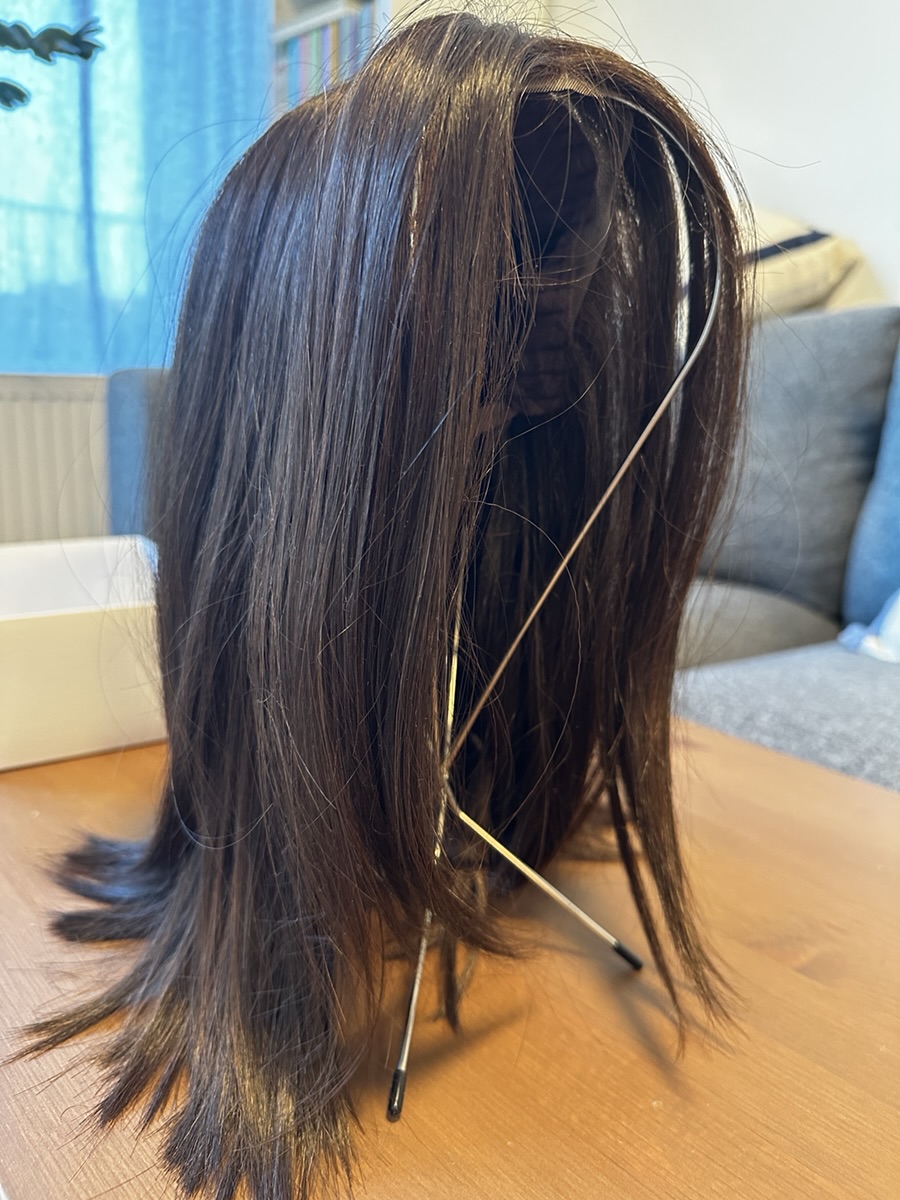
<p>I picked a random shop from the hospital’s approved list and went there right after my first EC round, hair still intact. The visit works like this: they ask about your preferences, then bring some wigs to you. You try them on, they bring more if you want, lots of them, I went through maybe ten, and you choose model, color, style, and price. I picked a synthetic one as close to my natural hair as possible. Real hair, if you’re curious, starts around 20,000 kroner, far beyond both my budget and my support rate. Then they adjusted it to fit my head.</p>

<p>The second visit was around two weeks later, right before my second EC round. By then my hair had fallen out in earnest and I had shaved my head. They cut and styled the wig on me like a normal hairdresser appointment, and I paid and took it home.</p>

<p>My bill: <strong>1,235 kroner.</strong> That included the wig itself (real price around 7,500), a stand to keep it on, a comb, and special shampoo and conditioner, plus care instructions. The system worked exactly as promised: NAV’s part went directly from NAV to the shop, and I never saw a form.</p>

<p><img src="/images/2026/07/wig-on-stand.jpg" alt="My wig, still on its stand" /></p>

<h3 id="then-i-wore-it-five-times">Then I wore it five times</h3>

<p>Including the day I wore it home from the shop.</p>

<p>It wasn’t the wig’s fault, exactly. It was a good wig, well fitted, professionally styled, color-matched. But my first chemo was in mid-May, summer was coming, and a wig is <em>hot</em>. Not itchy, just hot, plus a strange constant feeling of something tied onto my head, a low-grade headache that never let me forget it was there. I kept feeling it could blow away at any moment (the hairdresser promised it couldn’t, though she did mention my flat back of the head holds a wig less well than a rounder one, thanks for that new insecurity 😄). And here’s a small thing nobody tells you: when your real hair is too warm, you tie it up in a ponytail. You cannot ponytail a wig.</p>

<p>But the deepest problem was this: <strong>I didn’t feel like myself in it.</strong> I had chosen carefully, matched my old color and style, and it still looked fake on me. What I didn’t understand until too late is that the fake look doesn’t come from the hair, it comes from the <em>hairline</em>. When you have no hair at all, no baby hairs around the ears, no soft transition at the forehead, a wig’s edge is just visibly a wig’s edge. If I could choose again, I would pick one with bangs to cover the hairline. My rescue trick was a bucket hat on top of the wig, which hid the hairline and suddenly made the whole thing look real. But then I had to ask myself: if the wig only looks good with a hat on top, what is the wig actually doing? 🤔</p>

<h3 id="what-i-actually-wore">What I actually wore</h3>

<p>Scarves. Tied as a turban: quick, comfortable, cool, and honestly, I looked good in them. At home, bare head. And as the treatment went on, bare head outside too, partly because that summer was simply too hot, and partly because somewhere along the way I stopped caring what people thought about my head. The deeper you go into treatment, the more real things there are to think about, and “what do strangers think of my bare head” quietly fell off the list. I never felt ugly or embarrassed without hair. I got used to bald me surprisingly fast, faster than I expected, actually.</p>

<p>The wig, meanwhile, lived in its box. It still does. I keep thinking I should give it away, but it was fitted and cut for my head, so it wouldn’t sit right on someone else anyway. And yes, I feel a little guilty every time I see the box, 1,235 kroner divided by five outings is 247 kroner per wear, my most expensive accessory per use ever. 😅</p>

<h3 id="so-is-it-worth-it">So, is it worth it?</h3>

<p>For me: no. But here’s the thing, because NAV covered most of it, finding that out cost me very little, and that changes the answer completely.</p>

<p>If you’re in Norway and facing chemo, my honest advice: <strong>get the wig.</strong> With the support, the price of being wrong is small, and the price of wanting one in November and not having it is bigger. But choose better than I did: think about the hairline, consider bangs, and try it with the headwear you actually plan to use.</p>

<p>And know this: whether a wig matters is really a question about you, not about wigs. Everyone has a different relationship with their hair. For some women, losing it is the hardest moment of the whole treatment, the moment cancer becomes visible to the world, and for them a good wig can mean everything. For me, shaving my head turned out to be… nothing, really. No drama, no tears. Neither reaction is wrong, and honestly, you won’t know which kind you are until you’re standing there. That is exactly why the nearly-free wig is worth having in the closet, even if, like mine, it mostly stays there.</p>

<p>Did you get a wig during treatment? Did you actually wear it, or did it live in a box like mine? I’d love to know I’m not the only one. 👇</p>

<p><em>Disclaimer: I’m not a doctor and I won’t give any medical advice. All I share is my personal experience based on my own treatment plan. NAV rates mentioned are the 2026 rates, check nav.no for current numbers.</em></p>]]></content><author><name>Norway Life</name></author><category term="My unexpected journey" /><summary type="html"><![CDATA[I got a beautiful wig, almost for free thanks to NAV, and wore it five times in total. How wig support works in Norway, what I paid, and what I actually ended up wearing on my head.]]></summary><media:thumbnail xmlns:media="http://search.yahoo.com/mrss/" url="https://norway-life.com/images/2026/07/wig-cover.jpg" /><media:content medium="image" url="https://norway-life.com/images/2026/07/wig-cover.jpg" xmlns:media="http://search.yahoo.com/mrss/" /></entry><entry><title type="html">The Taxol: 12 Weekly Rounds, and the One I Skipped</title><link href="https://norway-life.com/2026/07/17/the-taxol-12-weekly-rounds-and-the-one-i-skipped/" rel="alternate" type="text/html" title="The Taxol: 12 Weekly Rounds, and the One I Skipped" /><published>2026-07-17T19:30:00+02:00</published><updated>2026-07-17T19:30:00+02:00</updated><id>https://norway-life.com/2026/07/17/the-taxol-12-weekly-rounds-and-the-one-i-skipped</id><content type="html" xml:base="https://norway-life.com/2026/07/17/the-taxol-12-weekly-rounds-and-the-one-i-skipped/"><![CDATA[<p><img src="/images/2026/07/taxol-cover.jpg" alt="Illustration: an IV drip bag beside a wall calendar with twelve marks, the last one left unmarked" /></p>

<p>When the fourth and last round of EC90 was done, I thought the worst part of chemo was behind me. Technically, that was true. What I didn’t know was that part two would be a completely different experience. Not harder, but longer, quieter, and strange in its own ways.</p>

<p>The plan was Taxol, a different chemotherapy medicine, once a week for 12 weeks. On the same day as my first Taxol I also got my first Phesgo injection, the targeted treatment that would continue long after chemo ended. Phesgo deserves its own chapter, so here I’ll just say it existed and move on.</p>

<h3 id="every-monday-the-same-routine">Every Monday, the same routine</h3>

<p>EC90 came every third week, so life had a rhythm: one heavier week, two okay weeks. Taxol flipped that completely. Every single Monday, the same program: get up early, take the metro to the hospital, pull a queue ticket (kølapp) for the blood test (blodprøve), sometimes a short appointment with the doctor or a nurse, then wait to be called into the infusion room. The infusion itself took about an hour, a bit longer than EC90. Then home, and a nap. Not a cozy little nap, the kind of sleep where you disappear for three hours. That nap was non-negotiable, my body simply shut down after every infusion.</p>

<p>About two thirds of the way through, my treatment moved from Ullevål to the brand new Radium hospital. I have to say, as far as places to get chemotherapy go, it’s a very nice one.</p>

<p>The less nice part of weekly chemo: needles, every week, in veins that got more and more tired of the whole project. Some weeks the nurse found a vein on the first try. One week it took four sticks 😞</p>

<h3 id="a-different-kind-of-tired">A different kind of tired</h3>

<p>At my first Taxol appointment I told the doctor that EC90 had been surprisingly easy for me, I almost didn’t feel it. He said there is no connection between how bad your side effects are and how well the treatment works. I found that very comforting, so I’m passing it on.</p>

<p>Taxol was, in the dramatic sense, even gentler. No nausea. No strong feeling of medicine sitting in the body, which EC90 definitely had. Food tasted normal, water tasted like water (or maybe slightly sweet, but I could live with that).</p>

<p>But the tiredness was a different kind of tired. Not sick-tired, more like the battery draining fast. I could feel completely fine sitting still, then any activity would empty me, and the need for sleep was huge. And this is the strange thing about chemo fatigue: resting doesn’t really refill the battery either. It’s just there, with or without the sofa.</p>

<h3 id="the-small-things-that-added-up">The small things that added up</h3>

<p>Taxol never hit me with one big wave. Instead, small things collected week by week:</p>

<ul>
  <li>Nosebleeds. Some weeks just a little, a few times properly heavy.</li>
  <li>Dry everything. Dry eyes, dry mouth, dry mucous membranes, and yes, it stings in places you don’t mention at a dinner table (if you know what I mean).</li>
  <li>A loose stomach on and off. Never dramatic, just unreliable.</li>
  <li>Aching joints and a body that felt a bit swollen, like it was holding water.</li>
  <li>Nails turning dark.</li>
  <li>And my face. Towards the end I got a rash, and some days my face was properly red and looked really bad. One day it got so red I took an extra Dexamethasone (a cortisone tablet from my chemo medicine pack), and it calmed down within hours, but I was genuinely scared the pigment changes would be permanent.</li>
</ul>

<p>Since this is written long after: the face took its time. It stayed inflamed for a good while after treatment, with pimples and generally unbalanced skin, and I honestly don’t know which treatment to blame for what. I ended up going for special facial treatments. It’s fine now, but it was not a quick fix.</p>

<p>None of these things alone was a big deal. That’s what surprised me about Taxol. There was no dramatic low point like the red devil weeks, just a slowly growing list of small complaints, and the question every week: will this one get worse?</p>

<h3 id="is-that-neuropathy-or-am-i-imagining-it">Is that neuropathy, or am I imagining it?</h3>

<p>Somewhere around the middle of the 12 weeks I started asking myself a strange question: is that tingling in my fingers real, or am I looking for it because the nurses keep asking about it?</p>

<p>Neuropathy (nerve damage in fingers and toes, a known Taxol side effect) is the thing the team watches closely, because it can become permanent. Mine never hurt. It was more like a faint presence, something I could notice if I paid attention, and then doubt a minute later. Is it there all the time? I honestly couldn’t tell, and I remember finding that uncertainty almost more annoying than the feeling itself.</p>

<p>Where it landed: today, almost two years later, I think a tiny bit is still there. It doesn’t bother me, I almost never think about it, but if I ask myself honestly, yes, something is there. I can live with that very well.</p>

<h3 id="life-kept-happening-around-it">Life kept happening around it</h3>

<p>Here is something I didn’t expect about a 12-week chemo: from the outside, big parts of that autumn probably looked almost normal.</p>

<p>I was still working a little through most of it, from home, at whatever pace the week allowed (<a href="/2026/07/16/working-during-treatment-how-was-it-really/">why I worked at all during cancer treatment is a whole post of its own</a>). I sold my old apartment between two rounds. Friends visited, and on the good days we walked all over the city. In the middle of it all I even flew to a work conference abroad. It went fine, mostly. One afternoon I hit the wall completely and was finished by four o’clock, back at the hotel feeling like I had a fever that the thermometer refused to confirm. But I went, I attended, I flew home. Sliten (tired), yes, but I did it.</p>

<p>I’m not telling this to sound tough. It’s more that weekly Taxol, at least for me, left room for pieces of normal life in between, and those pieces mattered more than I can explain.</p>

<h3 id="the-scare-i-didnt-need">The scare I didn’t need</h3>

<p>One thing from that autumn I’ll mention only briefly. At a routine examination for something completely unrelated, the doctors found something that needed further checking. I won’t go into details, because honestly the details don’t matter. What matters is the weeks of dread while waiting, convinced this was going to be a second cancer. I remember thinking: I can’t handle any more bad luck right now. I simply don’t have the capacity.</p>

<p>It turned out to be fine. But if you’re in treatment and something like this happens to you, I just want you to know the feeling is normal. When you’re already a cancer patient, every other little health finding feels ten times scarier than it would have before.</p>

<h3 id="finally-some-good-news-on-the-pictures">Finally, some good news on the pictures</h3>

<p>Around round 8 I had a control MR, and a mammography the day after. Small funny detail: the mammography hurt much less than the one from the diagnosis time. Maybe the technique, or maybe, just maybe, because the tumor had gotten smaller. I chose to believe the second one.</p>

<p>At round 10 the doctor confirmed it: the tumor was responding. Still visible on the pictures, but clearly smaller than before. After months of taking everyone’s word that the chemo was doing something, this was the first actual proof. It’s hard to describe how much lighter that Monday felt.</p>

<h3 id="the-round-i-never-took">The round I never took</h3>

<p>And then, the ending I didn’t see coming: I never took Taxol number 12.</p>

<p>By round 11 my face was reacting, the neuropathy question was hanging over me, and the doctor had already mentioned the option of reducing the dose for the last rounds. When week 12 came, I made a decision that honestly scared me: I skipped the last round. My own choice. I was afraid the side effects would get worse right at the finish line, and some of them are the kind that can stay.</p>

<p>I still took the blood test that Monday, and here’s the funny part: it was fine. According to the nurse, actually better than the week before. So I sat there with excellent blood values, voluntarily not taking my chemo, wondering if I was making a huge mistake. The gap between the last Taxol and the operation suddenly felt very long, and a small voice kept asking if I had ruined everything by skipping one single round.</p>

<p>The doctors and nurses reassured me it was completely fine, and they were right. I can say that with confidence now, because the operation later showed a complete response: no living cancer cells were found in what they removed (that whole story belongs to the operation chapter). So no, one skipped round did not ruin anything.</p>

<p>But I want to be careful here. I’m not telling you that skipping chemo is fine. I made that choice together with my treatment team, at round 11 out of 12, with good blood values and a tumor that was already responding. It was the right choice for me, in my situation, and even then it scared me. If you’re facing a similar question, that’s a conversation for your own team, not for a blog post.</p>

<p>Twelve weeks planned, eleven taken. And with that, chemotherapy was over. Next stop: the operation. But that’s the next chapter.</p>

<p>Did you also find that the weekly chemo was easier in the moment but harder on patience? And if you’ve been through Taxol: did the neuropathy question drive you as crazy as it drove me? I’d love to hear how it was for you.</p>

<p><em>I’m not a doctor and I won’t give any medical advice. All I share is my personal experience based on my own treatment plan.</em></p>]]></content><author><name>Norway Life</name></author><category term="My unexpected journey" /><summary type="html"><![CDATA[After EC90 came Taxol: 12 weekly chemo rounds. Gentler than the red devil, but the small side effects added up, and in the end I skipped the last round by my own choice.]]></summary><media:thumbnail xmlns:media="http://search.yahoo.com/mrss/" url="https://norway-life.com/images/2026/07/taxol-cover.jpg" /><media:content medium="image" url="https://norway-life.com/images/2026/07/taxol-cover.jpg" xmlns:media="http://search.yahoo.com/mrss/" /></entry><entry><title type="html">Working During Treatment, How Was It Really?</title><link href="https://norway-life.com/2026/07/16/working-during-treatment-how-was-it-really/" rel="alternate" type="text/html" title="Working During Treatment, How Was It Really?" /><published>2026-07-16T21:00:00+02:00</published><updated>2026-07-16T21:00:00+02:00</updated><id>https://norway-life.com/2026/07/16/working-during-treatment-how-was-it-really</id><content type="html" xml:base="https://norway-life.com/2026/07/16/working-during-treatment-how-was-it-really/"><![CDATA[<p><img src="/images/2026/07/working-during-treatment-cover.jpg" alt="A calm home office desk with a laptop and a steaming red mug by the window" /></p>

<p>Here is a confession to start with: I don’t actually know why I worked during my cancer treatment.</p>

<p>Nobody asked me to. My salary was safe either way (how sick pay works in Norway, and how I used 50 of my 52 weeks, is a whole post of its own: <a href="/2026/07/08/sykepenger-how-sick-pay-works-in-norway/">Sykepenger: How Sick Pay Works in Norway</a>). My employer told me, very clearly, to forget about work. And still, through most of chemo, I kept logging on. Why? If I’m honest, a big part of it was the “good girl” effect. I felt guilty when I didn’t work. My inner good girl apparently doesn’t take sick leave, even when the rest of me does. Not the most inspiring reason, but this post is about how it really was, so let’s start with the truth.</p>

<p>The money and paperwork side lives in the sykepenger post. This one is about the job itself: telling people, what the work days actually looked like, the guilt, and coming back.</p>

<h3 id="telling-my-boss">Telling my boss</h3>

<p>I told my leader first. He was shocked, and then immediately supportive: do whatever you need to do for the treatment. HR got involved, and that conversation was honestly one of the nicest of the whole period. They told me, almost word for word, to think only about myself, because the company would manage without me. It was a big company, so this was simply true. Nothing puts your importance in perspective like HR kindly confirming that everything runs fine without you. Somehow, during cancer treatment, that was exactly what I needed to hear.</p>

<p>I told my closest colleagues myself. The rest found out the way news always travels in a workplace, and that was fine with me. What surprised me most was how normal everything felt afterwards. I had imagined a cancer diagnosis would make work feel heavy somehow. Instead, my calendar just got new content: appointments, infusions, blood tests. I got used to the new routine of work plus treatment much faster than I would have guessed.</p>

<h3 id="what-my-work-days-actually-looked-like">What my work days actually looked like</h3>

<p>I worked 100% from home, no fixed hours, no fixed tasks. I did what I managed, when I managed. On paper I was fully sykemeldt (on sick leave), which in Norway does not forbid you to work, it just means nobody can expect anything from you. Then I reported the hours I actually worked to NAV (the welfare authority) at the end of each period. The details of how that works are in the sykepenger post.</p>

<p>And here’s the funny part: with all expectations removed, I worked more than anyone expected. Expectations dropped even lower than I had hoped for, haha, and then I went and exceeded them anyway. Some days I worked full hours. Chemo was not nice, but it was not super hard on me either, and many days there was room in my head for normal work.</p>

<p>I want to be honest about why that was possible, because it’s mostly a list of luck:</p>

<ul>
  <li>I have an office job that runs perfectly over Teams. If my job required showing up somewhere every day, in a kindergarten, a shop, a hospital ward, this whole post would be very different.</li>
  <li>I lived alone through treatment, no kids to pick up, nobody depending on me. I could rest exactly when I needed and work exactly when I could.</li>
  <li>My project happened to be in its ending phase. The heavy tasks were done before my diagnosis, and the remaining ones faded out gradually as the treatment got harder.</li>
  <li>A lot of it was not a special cancer arrangement at all, just normal Norwegian working life: home office and flexible hours. The flexibility was already there before I got sick.</li>
</ul>

<p>One more surprise: I didn’t feel the famous “chemo brain” much. But I say that carefully, because I never had to test it in an office with meetings and a commute. From my own sofa, thinking worked fine most days. For Teams meetings I showed up in a scarf tied as a turban, sometimes just bald. I stopped caring quite fast, and honestly, a bald head saves a lot of time in the morning routine.</p>

<h3 id="the-strange-thing-about-chemo-fatigue">The strange thing about chemo fatigue</h3>

<p>If you expect that resting cures the tiredness, I have news. The chemo fatigue didn’t get better because I lay down on the sofa. It never really went away at all (if you understand what I mean, it’s just there, with or without resting). And that changed the math for me: since resting didn’t fix anything, working didn’t really break anything either. On an okay day, an hour of normal tasks felt better than an hour of lying down being a patient.</p>

<h3 id="and-what-else-would-i-do">And what else would I do?</h3>

<p>People imagine a year of sick leave as a year of freedom. Believe me, I did the math on that freedom, and it was not much.</p>

<p>First, I have no hobby that could fill a whole year. I know, I should have one. (I even went hobby-hunting later, but that’s a story for another post.) Second, the treatment calendar decides your life. The appointments came so often that any longer trip was impossible to plan around them.</p>

<p>And third, even if the calendar had allowed it, traveling during chemo is a genuinely bad idea, and this part I want to explain properly because I didn’t understand it myself before treatment. During chemo, your immune system is regularly on the floor, and an ordinary infection can turn into sepsis, which is a life-threatening emergency, not a “see how it feels tomorrow” situation. If something happens, you want to be near YOUR hospital, the one with your journals, your treatment plan, your blood values, ready to act fast. Even another province in Norway is a downgrade, the hospital there doesn’t know you. Abroad? I honestly don’t think any travel insurance covers a chemo patient who chose to wander off mid-treatment. So my world that year was small: home, hospital, and short distances. Work was the one normal thing that fit inside it.</p>

<p>Deep down there was one more reason: I was afraid of becoming outdated. A whole year out of my field felt risky. I didn’t seriously think I would lose my job, but who knows. Working a little kept that fear quiet.</p>

<h3 id="the-guilt">The guilt</h3>

<p>Now the part I wish someone had told me about. I sometimes felt guilty for not working as much as I did before the diagnosis. Read that again: I was in the middle of chemotherapy, with zero obligation to work at all, and I felt guilty about my output.</p>

<p>I should not have felt that. But I did. If you’re going through treatment and feeling the same, I can’t give you a trick that removes it, I never found one. I can only tell you the guilt was wrong, mine and yours both.</p>

<h3 id="when-i-stopped-completely">When I stopped completely</h3>

<p>Towards the end of Taxol (my second type of chemotherapy) and before the operation, I stopped working completely. It was a mix of everything: the project ended, it made no sense to staff me on a new one mid-treatment, and my body was getting worse. By then the treatment needed all of me, and I let it have that.</p>

<h3 id="coming-back">Coming back</h3>

<p>When I came back to work full time, the start was gentle: a few hours a day helping ongoing projects, the rest for catching up on my field. Then a new project arrived, and I was back at 100% for real.</p>

<p>Two honest observations from the other side. First, nobody treated me differently, and I’m grateful for that. Second, I forgot what I had been through surprisingly fast. Within some months I was a normal employee with normal workload stress, sometimes close to burnout, and I caught myself being tired all the time without knowing whether that’s post-treatment tiredness or just, you know, life. I still don’t know.</p>

<h3 id="so-how-was-it-really">So, how was it really?</h3>

<p>For me: doable, sometimes even good for me, and much less dramatic than it sounds. But I refuse to turn that into advice, because my version rested on two big pieces of luck. I had a job that can be done from a sofa, and I had a body that took the treatment well, no extreme side effects, no complications. Change either of those, and my story changes completely.</p>

<p>So if you’re facing treatment and wondering whether to work: there is no right answer, and definitely no obligation. In Norway, the sick pay system takes the money pressure away exactly so you can choose freely. I didn’t have to work. I chose to work, for my own strange mix of reasons, and it happened to be the right choice for me.</p>

<p>Did you work through a treatment or a long illness, or did you stop completely? I’d love to hear what the choice looked like for you.</p>

<p><em>I’m not a doctor and I won’t give any medical advice. All I share is my personal experience based on my own treatment plan. Every body and every treatment is different.</em></p>]]></content><author><name>Norway Life</name></author><category term="My unexpected journey" /><summary type="html"><![CDATA[Nobody asked me to work through chemo. My salary was safe, my employer told me to forget about work, and still I kept logging on. The honest story: the good girl guilt, the luck that made it possible, and what chemo fatigue really does.]]></summary><media:thumbnail xmlns:media="http://search.yahoo.com/mrss/" url="https://norway-life.com/images/2026/07/working-during-treatment-cover.jpg" /><media:content medium="image" url="https://norway-life.com/images/2026/07/working-during-treatment-cover.jpg" xmlns:media="http://search.yahoo.com/mrss/" /></entry><entry><title type="html">Sales Season and a Classic Walk to the Palace</title><link href="https://norway-life.com/2026/07/11/sales-season-and-a-classic-walk-to-the-palace/" rel="alternate" type="text/html" title="Sales Season and a Classic Walk to the Palace" /><published>2026-07-11T18:30:00+02:00</published><updated>2026-07-11T18:30:00+02:00</updated><id>https://norway-life.com/2026/07/11/sales-season-and-a-classic-walk-to-the-palace</id><content type="html" xml:base="https://norway-life.com/2026/07/11/sales-season-and-a-classic-walk-to-the-palace/"><![CDATA[<p>The forecast said sun all day, it’s July, and staying inside watching TV felt almost illegal. So I did what I do many weekends: I became a tourist in my own city again. This time with a small extra excuse: it’s salg (the summer sales season), and even though I don’t need anything, I like to look. Looking is free, after all.</p>

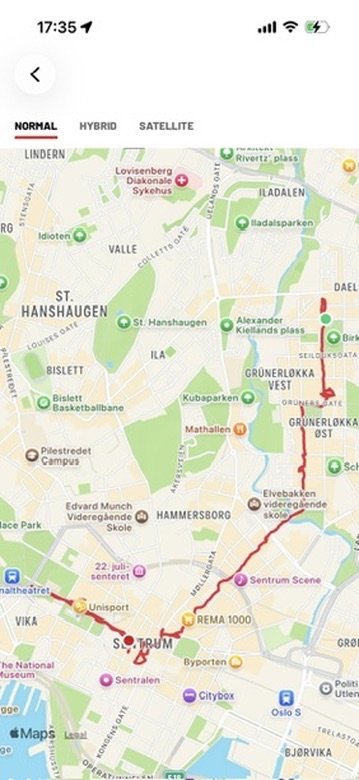
<p>The result was a 5.2 km walk from Grünerløkka down to the Royal Palace, one of the most classic walks Oslo has. I have done it many times before, and I still love it.</p>

<p><img src="/images/2026/07/tourist2-route-map.jpg" alt="My route: from Birkelund tram stop, through Grünerløkka, down to the Royal Palace" /></p>

<h3 id="brunch-first-always">Brunch first, always</h3>

<p>I started at Storo with a brunch sandwich (200 kr, and yes, that’s what a sandwich costs in Oslo, welcome). Normally I walk from Storo down to Grünerløkka too, but today I let the tram do that first stretch and jumped off at Birkelund, where the interesting part begins.</p>

<p>Tram ticket: 43.70 kr. If you buy single tickets in the Ruter app, you get a small loyalty discount after a while (mine is 5%). It’s not much, but I take every øre, haha.</p>

<h3 id="the-best-coffee-in-oslo-i-said-what-i-said">The best coffee in Oslo (I said what I said)</h3>

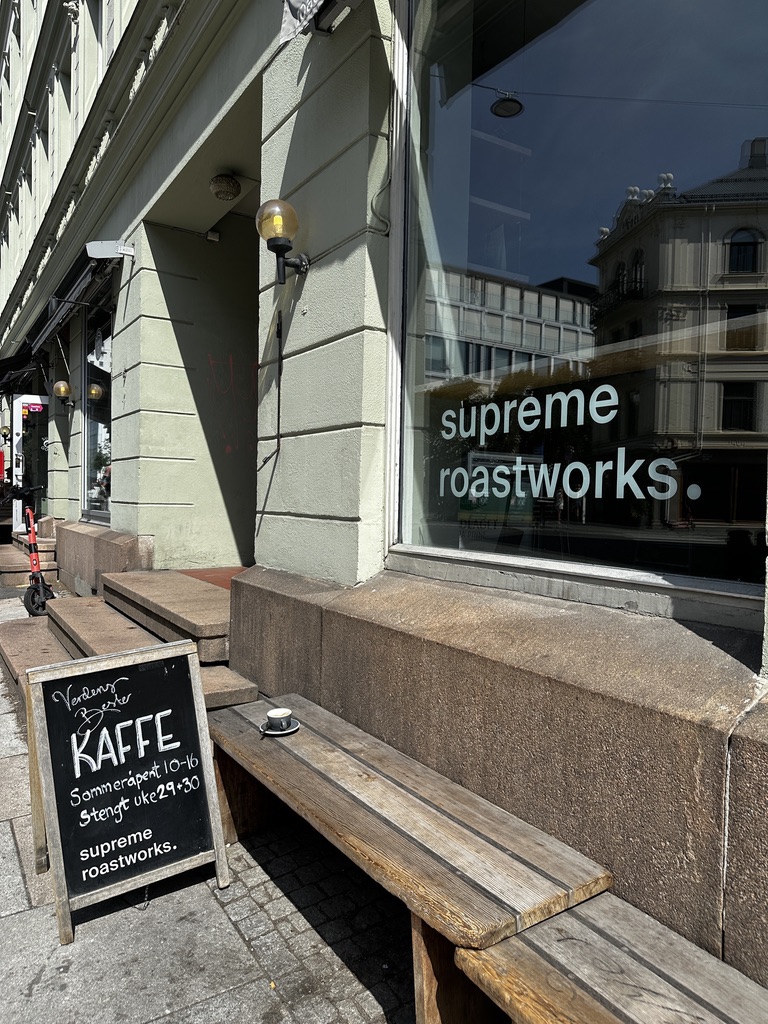
<p>First stop, and honestly half the reason I planned the route this way: Supreme Roastworks on Thorvald Meyers gate.</p>

<p><img src="/images/2026/07/tourist2-favorite-cafe.jpg" alt="My favorite coffee shop, with the world's most confident chalkboard (the cup on the bench is not mine, my latte was already gone)" /></p>

<p>Their chalkboard outside says “Verdens Beste Kaffe”, the world’s best coffee. Bold claim? Here is the thing: one of the two founders is a former World Brewers Cup champion (2015) and has been Norwegian brewing champion four times. The place started in a garage in 2007 and moved to this corner in Grünerløkka in 2013, where they still roast the beans in the middle of the shop. So the sign is less bragging than it looks.</p>

<p>I used to live and work in this area, and I honestly don’t want to know how much money I have given them over the years. Now I stop by whenever I have a chance. Latte on the bench outside: 60 kr. Verdict: worth it, every time.</p>

<h3 id="thorvald-meyers-gate-the-catwalk-of-grünerløkka">Thorvald Meyers gate, the catwalk of Grünerløkka</h3>

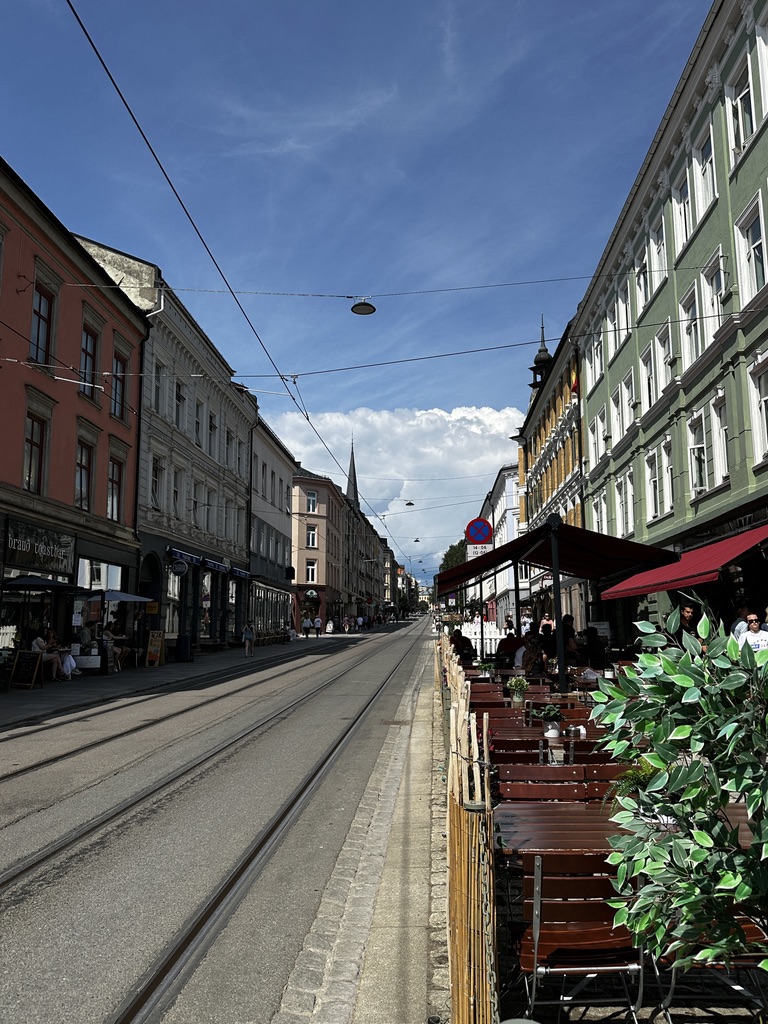
<p>From there I walked down along the tram tracks through Grünerløkka.</p>

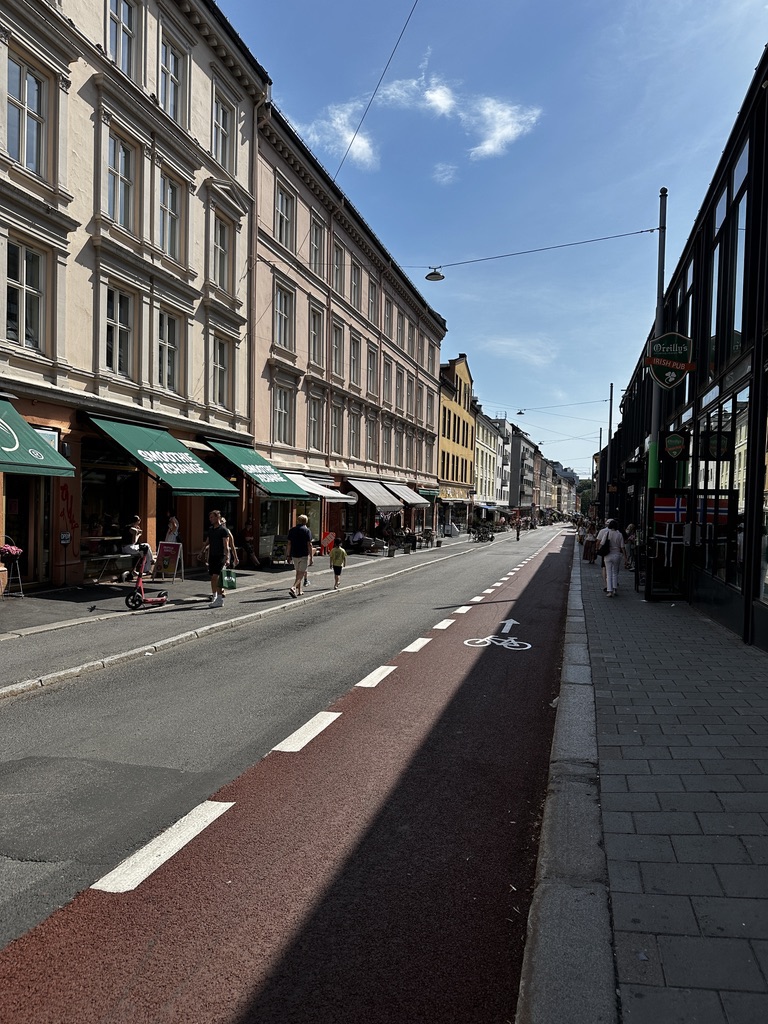
<p><img src="/images/2026/07/tourist2-grunerlokka-tram.jpg" alt="Thorvald Meyers gate on a summer Saturday" /></p>

<p>A little history, because I think it makes the walk better: in the 1800s this was a working-class district, built around the factories along the Akerselva river. The whole main street is named after Thorvald Meyer, the businessman who bought the land here in the 1860s. When the industry died, the rents got cheap, the artists and students moved in, and today it’s the neighborhood everyone calls “the hip one”: vintage shops, coffee bars, small restaurants, and small parks every few blocks.</p>

<p><img src="/images/2026/07/tourist2-grunerlokka-street.jpg" alt="Green awnings, red bike lane, Norwegian flags: very Løkka" /></p>

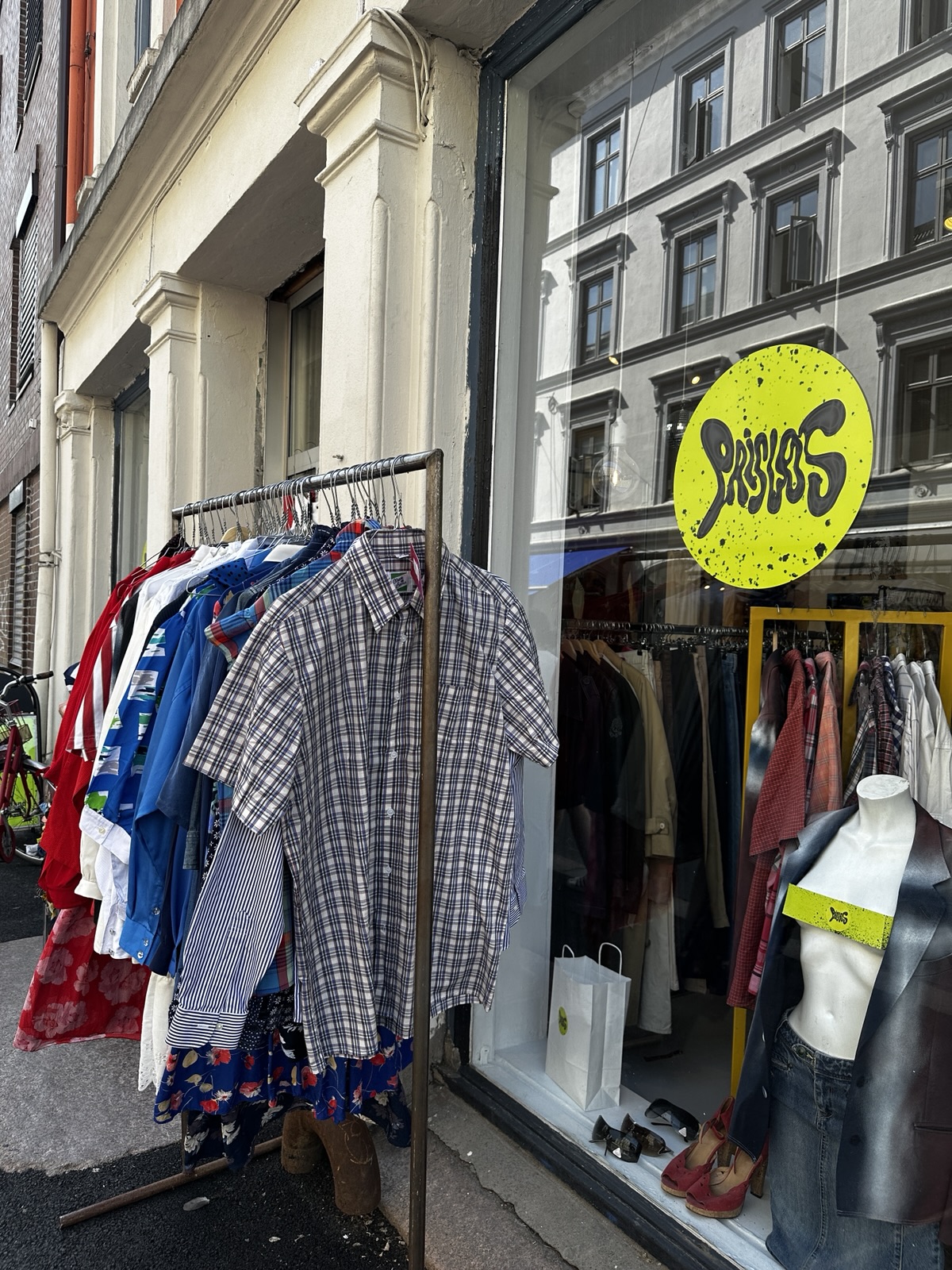
<p>Since it’s sales season, I went into more or less every clothes shop on the way, including the vintage ones with racks standing outside in the sun. I tried, I looked, I put things back. I’m a quite conscious spender, but I genuinely enjoy looking at things (my wallet and I have an understanding).</p>

<p><img src="/images/2026/07/tourist2-vintage-shop.jpg" alt="Vintage racks outside, sales season in full swing" /></p>

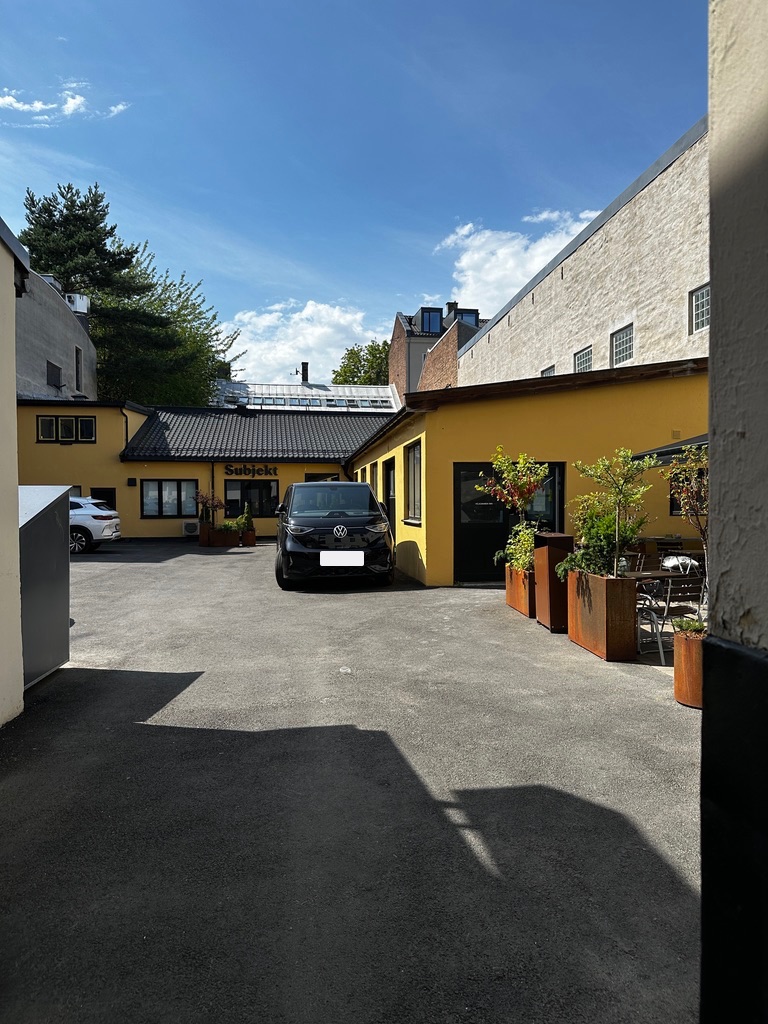
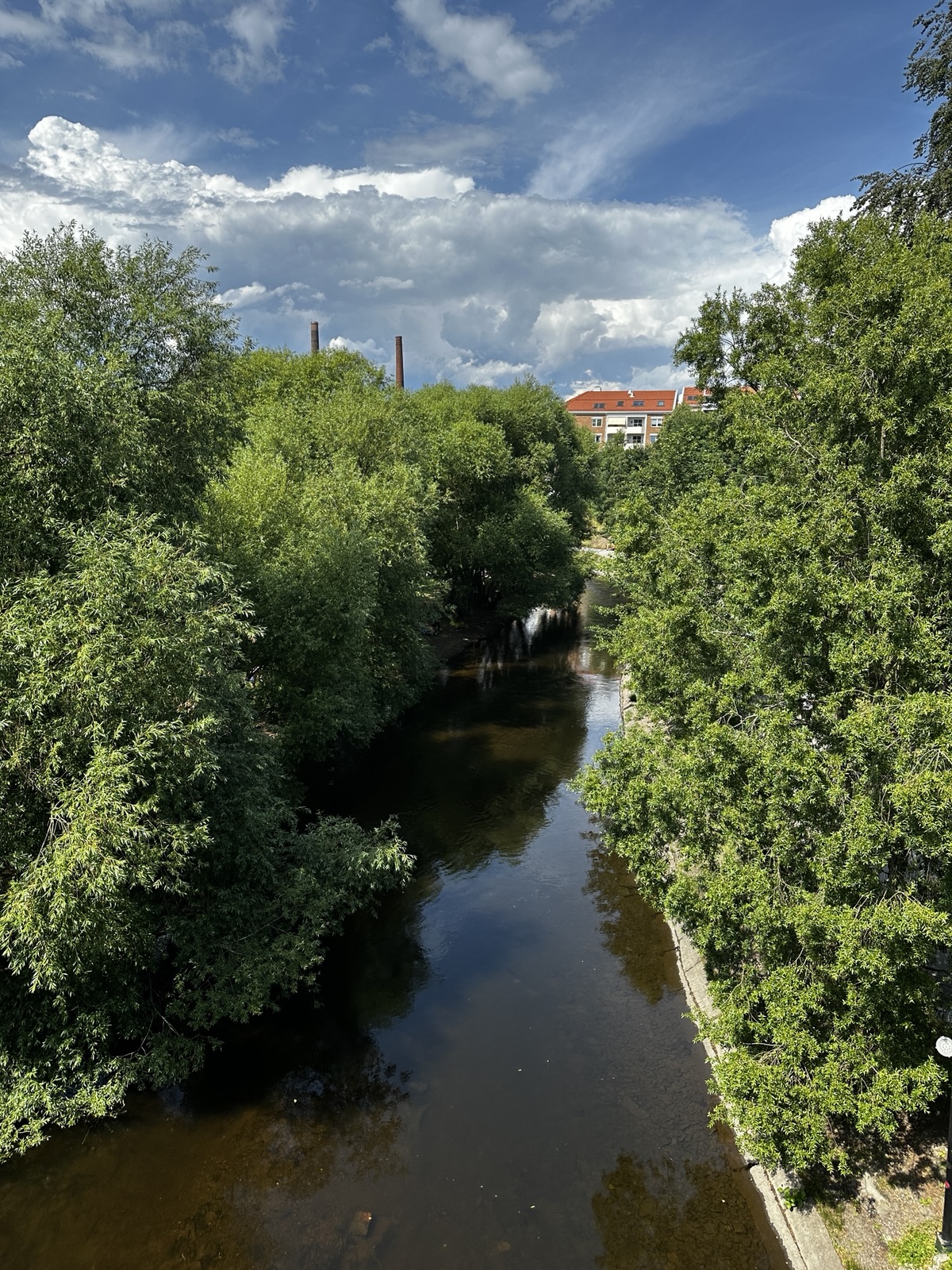
<p>Two small detours I always recommend here: peek into the bakgårder (the backyard courtyards), because half of Løkka’s life hides behind the street facades, and cross over to the Akerselva river for a few quiet minutes. It’s strange to think this calm green river is the reason the whole neighborhood exists. I want to walk the whole river properly one day, from top to bottom, and that day will get its own post. Today it was just a quick hello.</p>

<p>About the bakgårder: many of them are the cosiest coffee spots in the whole neighborhood, and on a day like this they were full of people enjoying the sun with their cups. Which is exactly why I have no photo of the loveliest ones, I’m not going to point my camera at strangers relaxing on their Saturday. So here is a quieter one instead, and the good ones you’ll have to find yourself (that’s half the fun anyway).</p>

<p><img src="/images/2026/07/tourist2-bakgard.jpg" alt="A quieter courtyard; the cosiest ones were too full of happy coffee drinkers to photograph" /></p>

<p><img src="/images/2026/07/tourist2-akerselva.jpg" alt="Akerselva, the river that built Grünerløkka. A proper river walk is coming another day" /></p>

<h3 id="the-vibe-shift">The vibe shift</h3>

<p>Somewhere after Grünerløkka ends, the city changes character completely. The energy goes from young, hipster, slightly scruffy to polished and touristy: Karl Johans gate, the fancier shops, the souvenir bags. I stopped by Glasmagasinet (the old department store) just to wander around inside, then walked the whole of Karl Johans gate up to the Royal Palace.</p>

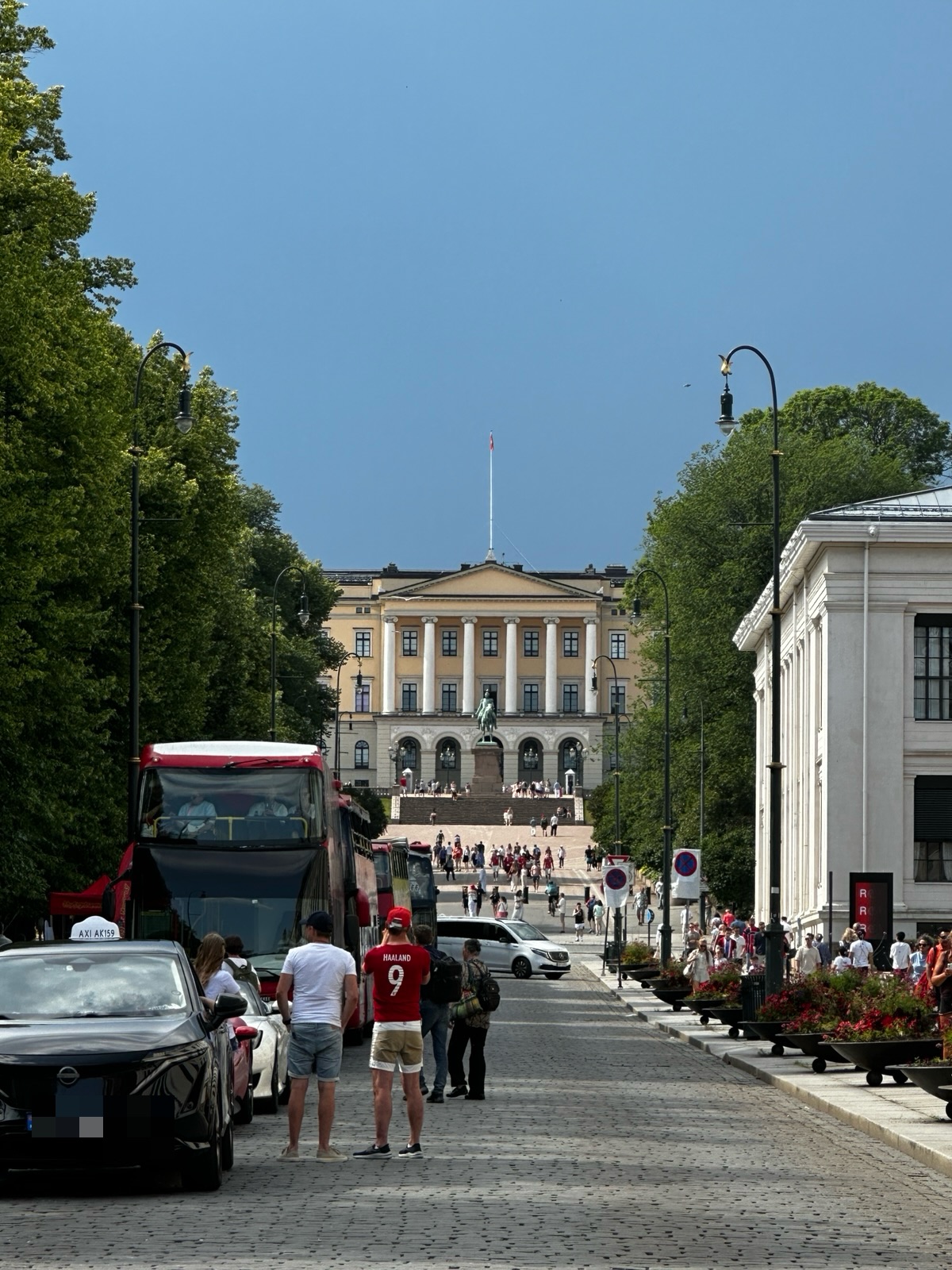
<p>Today the shift was extra visible, because Norway plays England in the World Cup tonight, and the center was already filling up with supporters in red national team shirts. I’m not a football fan, but of course I will watch the game and support Norway. From my own sofa, though. I’m a little scared of the crowds (if you know what I mean).</p>

<p><img src="/images/2026/07/tourist2-royal-palace.jpg" alt="The Royal Palace, the tourists, and one very patriotic Haaland shirt" /></p>

<p>The palace square was packed with tourist buses and photo-takers, which is exactly its job in July. I looked at the palace for a few minutes, then took the T-bane home from Nationaltheatret. Feet: done. Head: completely refreshed.</p>

<h3 id="the-bill">The bill</h3>

<table>
  <thead>
    <tr>
      <th>What</th>
      <th>Price</th>
    </tr>
  </thead>
  <tbody>
    <tr>
      <td>Tram Storo to Birkelund</td>
      <td>43.70 kr</td>
    </tr>
    <tr>
      <td>Brunch sandwich at Storo</td>
      <td>200 kr</td>
    </tr>
    <tr>
      <td>Latte at Supreme Roastworks</td>
      <td>60 kr</td>
    </tr>
    <tr>
      <td>Sales season shopping</td>
      <td>0 kr (self-control: undefeated)</td>
    </tr>
    <tr>
      <td>T-bane home from Nationaltheatret</td>
      <td>43.70 kr</td>
    </tr>
    <tr>
      <td><strong>Total</strong></td>
      <td><strong>347.40 kr</strong></td>
    </tr>
  </tbody>
</table>

<h3 id="small-truths-from-a-local-tourist">Small truths from a local tourist</h3>

<ul>
  <li>Grünerløkka’s real charm is not on the main street. It’s in the bakgårder, the side streets and along the river.</li>
  <li>Coffee at Supreme Roastworks beats most 60 kr experiences in this city.</li>
  <li>“Just looking” during salg is a completely legitimate weekend activity. The shops don’t agree, but they can’t stop us.</li>
  <li>On big match days, the center gets crowded early. If crowds aren’t your thing, do this walk in the morning and be home before kickoff.</li>
  <li>Summer Oslo is a different city: everyone is outside, the cafés fill up by early afternoon, and the whole town acts like it needs to store sunlight for the winter (it does).</li>
</ul>

<p>Do you also have a walk you have done a hundred times and still love? Or is that just me and this tram line? Tell me yours.</p>]]></content><author><name>Norway Life</name></author><summary type="html"><![CDATA[A 5 km Saturday walk from Grünerløkka to the Royal Palace: world-champion coffee for 60 kr, vintage racks in the sales season, and a city center full of red football shirts. Total bill: 347 kr.]]></summary><media:thumbnail xmlns:media="http://search.yahoo.com/mrss/" url="https://norway-life.com/images/2026/07/tourist2-favorite-cafe.jpg" /><media:content medium="image" url="https://norway-life.com/images/2026/07/tourist2-favorite-cafe.jpg" xmlns:media="http://search.yahoo.com/mrss/" /></entry><entry><title type="html">Sykepenger: How Sick Pay Works in Norway (and My 50 Weeks on It)</title><link href="https://norway-life.com/2026/07/08/sykepenger-how-sick-pay-works-in-norway/" rel="alternate" type="text/html" title="Sykepenger: How Sick Pay Works in Norway (and My 50 Weeks on It)" /><published>2026-07-08T17:00:00+02:00</published><updated>2026-07-08T17:00:00+02:00</updated><id>https://norway-life.com/2026/07/08/sykepenger-how-sick-pay-works-in-norway</id><content type="html" xml:base="https://norway-life.com/2026/07/08/sykepenger-how-sick-pay-works-in-norway/"><![CDATA[<p><img src="/images/2026/07/sykepenger-cover.jpg" alt="A quiet living room with a blanket, a closed laptop, letters and a red mug" /></p>

<p>Out of everything cancer forced me to deal with, sick pay is the part I spent the least energy on. In Norway it’s called sykepenger (literally “sick money”), and I had heard the system works smoothly. It did. It never added one more stress to my life at a time when I had plenty to choose from. And that is exactly why I want to write about it properly, because when something works this quietly, nobody explains it to you. You just hear “don’t worry, you get sick pay” and that’s it.</p>

<p>So how does it actually work? And what do I wish more foreigners knew before they need it? Let me go through it, with my own 50 weeks as the example.</p>

<p>I wrote a shorter version of this inside my post about <a href="/2026/04/16/cancer-treatment-in-norway-all-the-financial-support-i-got/">all the financial support I got during cancer treatment</a>. This is the full picture.</p>

<h3 id="the-basics">The basics</h3>

<p>If you are employed in Norway and you get too sick to work, this is the deal:</p>

<ul>
  <li>Your employer pays your full salary for the first 16 days.</li>
  <li>From day 17, NAV (Norway’s welfare authority) takes over and pays 100% of your salary, but only up to a ceiling of 6G. G is a base amount the whole welfare system is built around (the “grunnbeløp”), and it gets adjusted every May. Right now (2026) 6G is 819,294 kroner per year. Earn more than that, and NAV’s part stops at the ceiling (more about this trap later).</li>
  <li>You can get sick pay for a maximum of 52 weeks. Not 52 weeks per year, 52 weeks total for the same sickness, and then the counter needs 26 weeks of you back at work before you earn a new round.</li>
  <li>To qualify at all, you need to have worked at least 4 weeks before you got sick, and earn at least 0.5G per year.</li>
</ul>

<p>One thing worth knowing if you freelance or run your own company: the rules are less generous. Self-employed people get 80% and only from day 17, unless they buy extra insurance from NAV. As an employee you are in the comfortable seat here.</p>

<p>And a small honest disclaimer: my situation was the simple one, one employer and one salary. If you have more than one employer when you get sick, or business income on top of your normal salary, the calculation gets more complicated than what I describe here. I won’t pretend to know those combinations, but NAV can explain all of it, so ask them directly instead of guessing.</p>

<h3 id="my-timeline-from-50-to-100-not-in-the-order-youd-expect">My timeline: from 50% to 100%, not in the order you’d expect</h3>

<p>The cancer came so suddenly, and treatment had to start right away. Logically I understood it, but somehow I found it difficult to “integrate” cancer into my schedule. So at the beginning I was only on 50% sick leave, while I was halfway through egg freezing with hormone injections on a strict clock. I remember being out with colleagues at an after-work thing and having to rush home to take my injection on time. My doctor wondered a bit why I wasn’t on full sick leave yet, treatment should be prioritized. I knew that. It just came too suddenly for my head to catch up.</p>

<p>Then the appointments got intense, and at some point I realized that being sick had become my full-time job. So I went on 100% sick leave. Honestly, the biggest thing I bought with that was peace of mind: when you are officially 100% sykemeldt (the Norwegian word for being on sick leave), nobody from work expects anything from you. That silence is worth a lot when your calendar is full of hospital appointments.</p>

<h3 id="the-thing-nobody-told-me-100-sick-leave-is-a-ceiling-not-a-floor">The thing nobody told me: 100% sick leave is a ceiling, not a floor</h3>

<p>Here is the practical detail I find genuinely smart about the system. Being on 100% sick leave does not mean you are forbidden to work. It means nobody can expect you to. I could still work as much as I felt like in a good week, and then I simply reported the real percentage in the application I sent to NAV at the end of each period. You can even choose whether to answer in percent or in hours.</p>

<p>The rhythm goes like this: the doctor writes a sykmelding, the official sick note, about 4 weeks at a time. When a period ends, you get an SMS from NAV, you log in, answer a few simple questions (how much did you actually work, did you take vacation, that kind of thing), and send it. Then your employer and NAV sort out the money between themselves. Getting a new sick note every 4 weeks sounds like admin, but I had to see my GP (fastlege) all the time anyway, so it cost me nothing extra.</p>

<h3 id="the-6g-trap-read-your-work-contract-now-not-later">The 6G trap: read your work contract now, not later</h3>

<p>This is the part I most want foreigners to hear, because even I missed it, and I had lived here 13 years and read more NAV regulations than any healthy person should.</p>

<p>I assumed NAV pays 100% of your salary, full stop. It doesn’t. It pays 100% up to 6G (in my sick leave year, 2024, that ceiling was around 744,000 kroner). If you earn above that, the part over the ceiling is not covered by NAV at all. Whether you still get your full salary depends on one thing: your employment contract.</p>

<p>Mine said full pay during sickness. I knew that line was in the contract when I signed it, but I didn’t understand what it actually meant, because I didn’t know about the ceiling. What it means is: my employer paid my normal salary the whole 50 weeks, claimed the NAV part back for themselves (this is called refusjon), and covered the gap above 6G from their own pocket. For me, nothing changed at all. Same salary on the same date, same tax, same holiday pay. Being seriously sick made zero difference to my economy, and I only later understood that this is not automatic, it’s a benefit.</p>

<p>So my advice: open your contract today and look for what it says about pay during sickness (“lønn under sykdom” if your contract is in Norwegian). Many employers in Norway top up to full salary, but not all. If you earn over 6G and your contract is silent about it, that is a question worth asking while you are healthy.</p>

<h3 id="the-52-week-clock">The 52-week clock</h3>

<p>You get 52 weeks, and here is the detail that surprises people: partial sick leave burns the weeks at the same speed. A week at 20% sick leave costs one week of the 52, same as a week at 100%. I knew this from the start, and honestly it was easy to keep track, my page on nav.no showed the overview the whole time.</p>

<p>As I got close to the end, both NAV and my GP warned me. NAV wanted to set up a meeting with my employer and my doctor (this is standard follow-up), but my doctor wrote that it wasn’t necessary, the diagnosis was clear and the treatment was simply hard. NAV agreed, and that was that. The system has checkpoints, but it also has common sense.</p>

<p>I went back to work 100% after 50 weeks. Partly because I felt OK enough, and partly on purpose: I wanted to save 2 weeks in case I got sick again after coming back. Luckily I never needed them.</p>

<p>And I have to be honest about one thing here. I managed to come back full time because I have an office job. I could work from home, stretch my hours, rest in between when I needed. If my work had been physical, or the kind where you must show up somewhere every single day, I don’t think I would have made it. Fatigue after treatment is real, and it doesn’t care that your papers say you are healthy enough to work.</p>

<h3 id="what-if-the-52-weeks-run-out">What if the 52 weeks run out?</h3>

<p>If you are still too sick to work when sick pay ends, the next step is called AAP (arbeidsavklaringspenger, or “work assessment allowance” in English). The short version: it’s about 66% of your previous income (still capped at 6G), while you and NAV figure out whether and how you can get back to work.</p>

<p>Did the clock stress me? Actually no, and my logic was simple: if the treatment went badly and I ran out of weeks, I would go on AAP with much less money, and I would just have to live with that. No choice, so no point stressing. But I did sit down and read the regulations myself, because I wanted to know exactly what I would deal with if everything got worse. I recommend that. It’s easier to carry a plan B you understand than a vague fear.</p>

<h3 id="traveling-while-on-sick-pay">Traveling while on sick pay</h3>

<p>One thing many people don’t know: you can travel while on sick leave, but there are rules. Inside the EU/EEA it’s fairly simple, but if you want to travel outside the EU/EEA (in my case, to visit family), you must apply to NAV before you go, and the limit today is up to 4 weeks per 12 months. I told the story of my paper application adventure in <a href="/2026/04/16/cancer-treatment-in-norway-all-the-financial-support-i-got/">the financial support post</a>, so I won’t repeat it here, but the rule itself is worth knowing before you book anything.</p>

<h3 id="the-quiet-safety-net">The quiet safety net</h3>

<p>When I look back at the whole treatment year, sick pay is almost invisible in my memories, and I mean that as the biggest compliment. The money came, the forms took five minutes, the system left me alone to be sick. In a year where so much was uncertain, my economy simply wasn’t.</p>

<p>If you live in Norway and you’re healthy right now, do the two boring things: check what your contract says about sick pay, and remember that the NAV ceiling exists. Future you might be very grateful.</p>

<p>Have you dealt with sykepenger yourself, as a foreigner or a Norwegian? Did the system treat you as gently as it treated me? I’d love to hear how it went for you.</p>

<p><em>A note on the numbers: everything here describes the rules as I experienced them and as they are in July 2026. These things change (the G amount changes every single May), so always check nav.no for the current rules.</em></p>

<p><em>I’m not a doctor and I won’t give any medical advice. All I share is my personal experience based on my own treatment plan.</em></p>]]></content><author><name>Norway Life</name></author><category term="My unexpected journey" /><category term="Life in Norway" /><summary type="html"><![CDATA[Sick pay in Norway, explained by someone who used 50 of her 52 weeks: the 6G ceiling most foreigners miss, why 100% sick leave doesn't forbid working, and what happens if the weeks run out.]]></summary><media:thumbnail xmlns:media="http://search.yahoo.com/mrss/" url="https://norway-life.com/images/2026/07/sykepenger-cover.jpg" /><media:content medium="image" url="https://norway-life.com/images/2026/07/sykepenger-cover.jpg" xmlns:media="http://search.yahoo.com/mrss/" /></entry><entry><title type="html">25,000 Steps and Zero Plans</title><link href="https://norway-life.com/2026/07/05/a-tourist-in-my-own-city-25000-steps-and-zero-plans/" rel="alternate" type="text/html" title="25,000 Steps and Zero Plans" /><published>2026-07-05T18:00:00+02:00</published><updated>2026-07-05T18:00:00+02:00</updated><id>https://norway-life.com/2026/07/05/a-tourist-in-my-own-city-25000-steps-and-zero-plans</id><content type="html" xml:base="https://norway-life.com/2026/07/05/a-tourist-in-my-own-city-25000-steps-and-zero-plans/"><![CDATA[<p><img src="/images/2026/07/fjaerkonfekt-coconut-mango-cake.jpg" alt="A cake shaped like half a coconut, filled with cream and fresh mango, on a café terrace" /></p>

<p>I love being a tourist in my own city. I do it regularly: pick a day, put on walking shoes, and see Oslo like I don’t live here. This is the first post of what will become a little series, one day out per post. Some days will be the famous places from the guidebooks, some days will be very local. Today was supposed to be the famous harbor route. It wasn’t.</p>

<p>I had a whole plan, you see. Opera roof, fjord swim, island ferry, the works. Then Sunday morning came, the sun was out, and I realized I didn’t want to follow a plan. Following an itinerary on my day off felt like work with extra steps. So I did what a tourist in her own city is uniquely allowed to do: I threw the plan away and just walked. 25,000 steps, as it turned out.</p>

<h3 id="the-accidental-route">The accidental route</h3>

<p><img src="/images/2026/07/oslo-walk-map-part-1.jpg" alt="Map of the walking route from Nydalen through Frognerparken to Skøyen" /></p>

<p><img src="/images/2026/07/oslo-walk-map-part-2.jpg" alt="Map of the walking route from Skøyen along the fjord to Nationaltheatret" /></p>

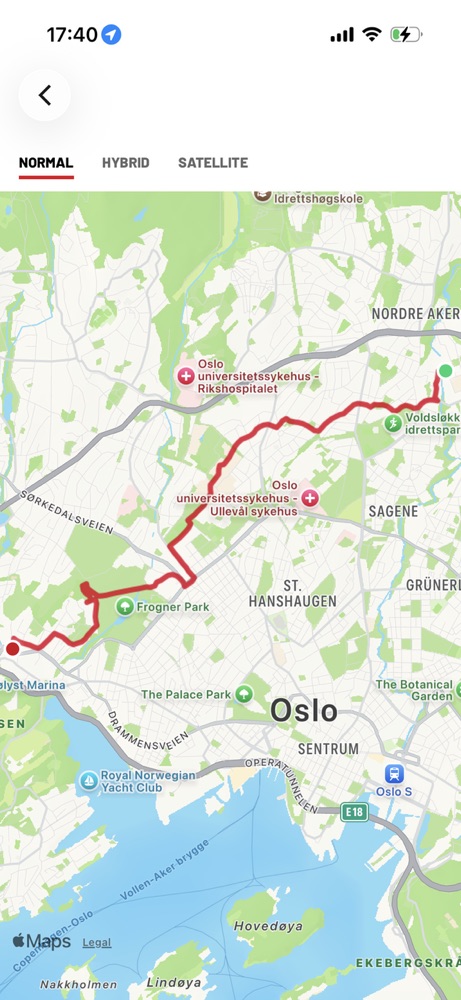
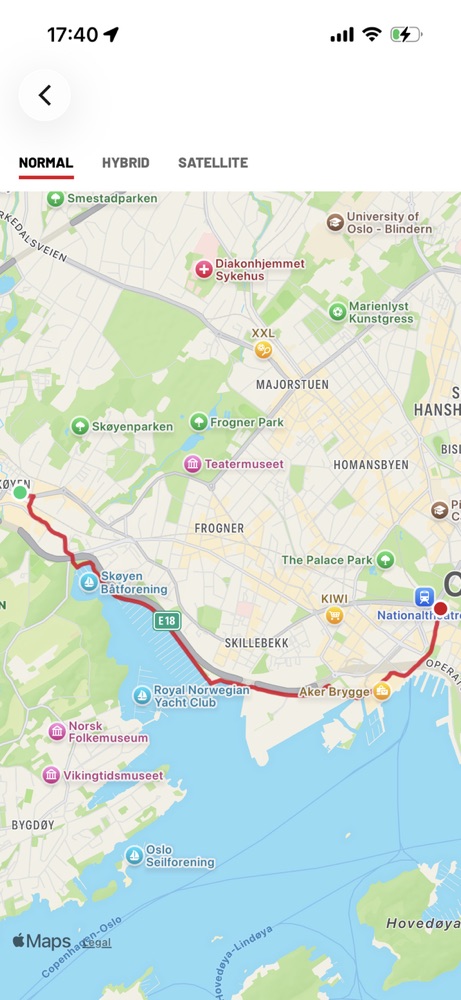
<p>I started on the east side with a long warm-up walk, then took the T-bane up to Nydalen. From there, everything happened on foot: through Voldsløkka’s green fields, past the university at Blindern, down to Frognerparken, onwards to Skøyen, and then along the water all the way back to Nationaltheatret. Two T-bane rides at the ends, everything else walked.</p>

<h3 id="brunch-at-joe--the-juice-nydalen">Brunch at Joe &amp; The Juice, Nydalen</h3>

<p>My standard order there: the Serrano sandwich and an iced vanilla matcha oat latte. The sandwich is 128 kroner and the matcha is 73, so 201 kroner for brunch. Yes, that’s what a sandwich and a fancy drink cost in Oslo. No, I have not fully accepted it either, but it is my little routine and I love it.</p>

<h3 id="the-walk-nobody-puts-in-a-guidebook-nydalen-to-frognerparken">The walk nobody puts in a guidebook (Nydalen to Frognerparken)</h3>

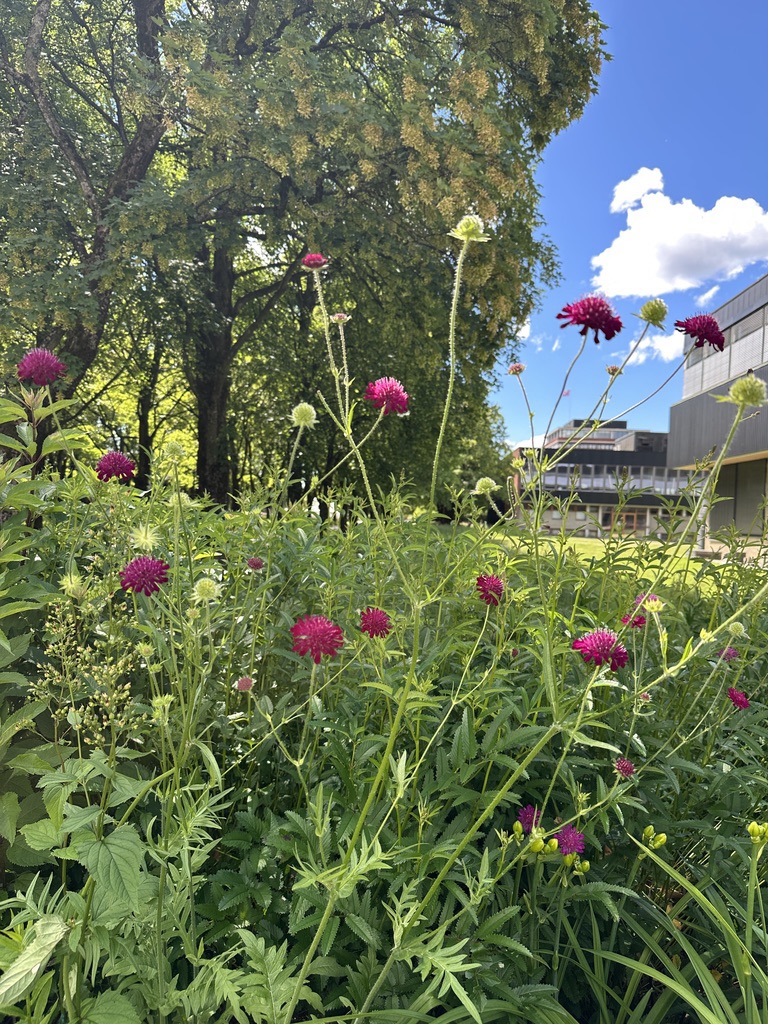
<p>This stretch was the quiet star of the day. No sights, no landmarks, just green parks and calm residential streets. I greeted some street cats. I inspected the fruit trees hanging over people’s garden fences, and I can report that the cherries are big now and almost ripe. I passed wild strawberries growing by the path.</p>

<p><img src="/images/2026/07/oslo-wild-strawberries.jpg" alt="Wild strawberries growing by the path" /></p>

<p><img src="/images/2026/07/oslo-crimson-flowers.jpg" alt="Crimson flowers along a path in Oslo, summer" /></p>

<p><img src="/images/2026/07/oslo-white-flowers.jpg" alt="White flowers in front of an ivy-covered wall" /></p>

<p>This is my favorite thing about Oslo that tourists never see: you can cross half the city through parks and gardens, and it’s genuinely beautiful. It costs nothing. It’s not on any top-10 list.</p>

<h3 id="frognerparken-on-a-july-sunday">Frognerparken on a July Sunday</h3>

<p><img src="/images/2026/07/vigeland-monolith-tourists.jpg" alt="The Vigeland Monolith surrounded by visitors on a sunny day" /></p>

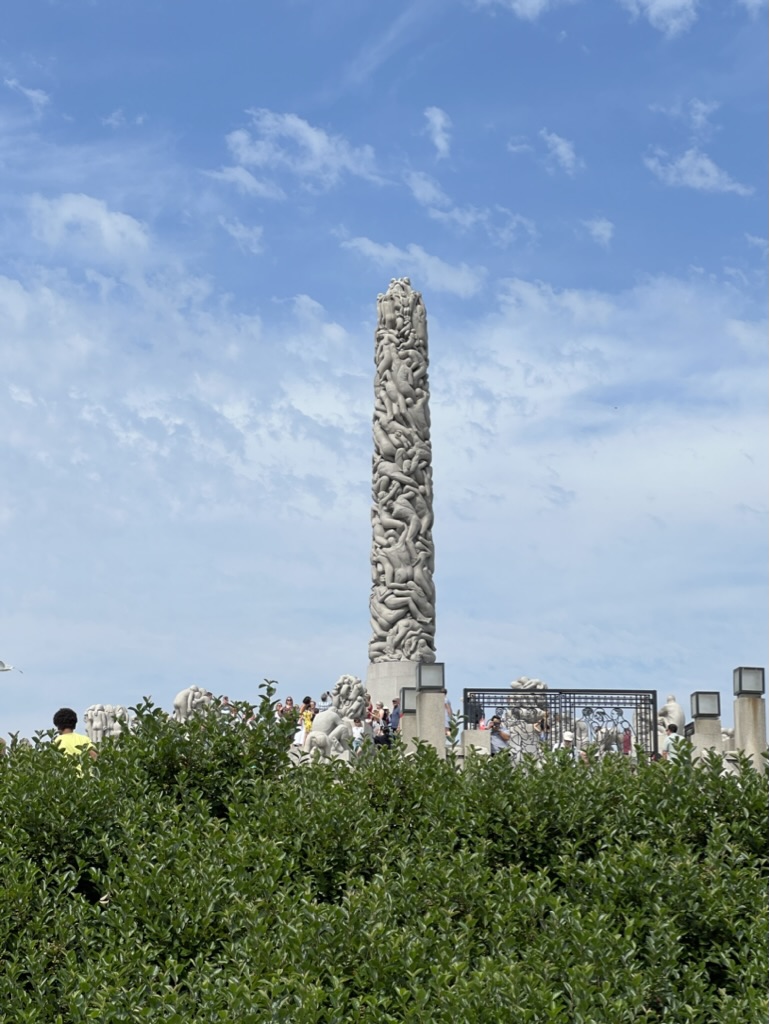
<p>And then, suddenly, tourists. Frognerparken with the Vigeland sculptures is on every single Oslo itinerary, and on a sunny July Sunday it shows. The park was packed, group tours everywhere, and the sculpture areas were fully occupied by tourists. So I did the local move: I just walked around in the green parts of the park and let them have the statues. 😄 Still, the park is free, enormous, and the Monolith is genuinely worth seeing once. Verdict: worth it, and locals get it every day for free.</p>

<h3 id="cake-break-at-fjærkonfekt-skøyen">Cake break at Fjærkonfekt, Skøyen</h3>

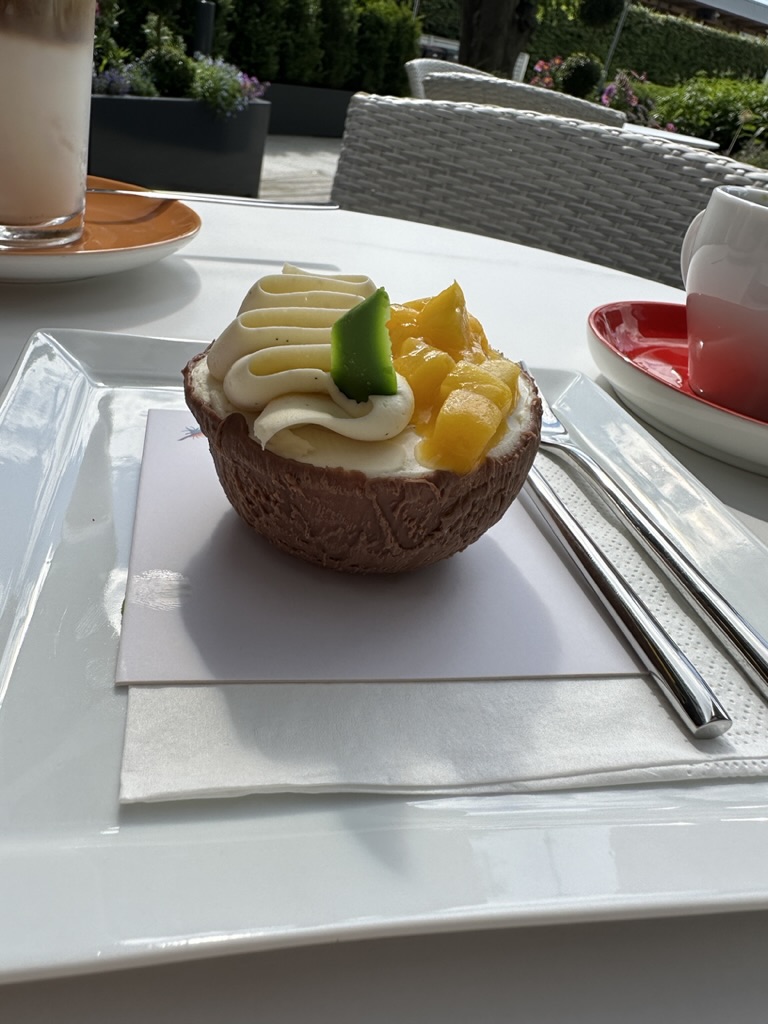
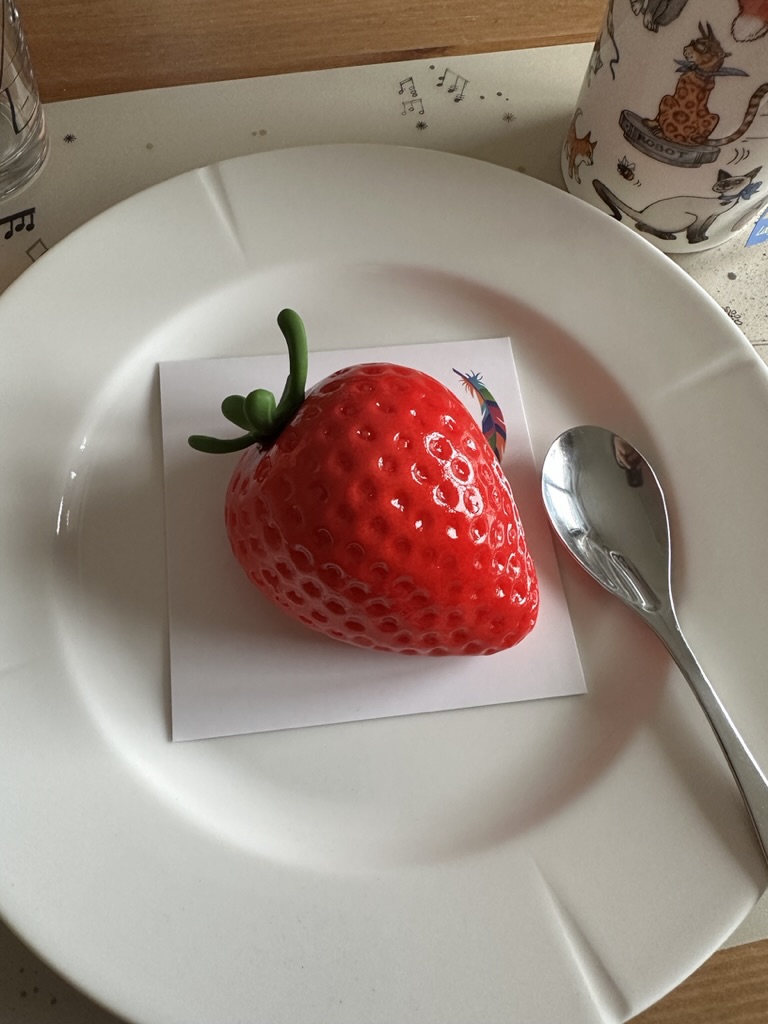
<p>From Frognerparken I walked to Skøyen for a stop I had been looking forward to: Fjærkonfekt, a small konditori that makes cakes shaped like fruits. Today I had one shaped like a coconut, filled with cream and mango. Cake plus an americano came to 190 kroner (the cake alone is 134).</p>

<p><img src="/images/2026/07/fjaerkonfekt-strawberry-cake.jpg" alt="A cake shaped like a strawberry, on a plate at home" /></p>

<p><img src="/images/2026/07/fjaerkonfekt-lemon-cake.jpg" alt="A cake shaped like a lemon, on a plate at home" /></p>

<p>Honest verdict: the taste is good but not extraordinary, what you’re paying for is the look, and the look is spectacular. I have bought their strawberry and lemon ones home before, and every time it feels slightly wrong to put a spoon through them. Worth the detour, and a lovely break for tired feet.</p>

<h3 id="the-beach-club-i-never-knew-existed">The beach club I never knew existed</h3>

<p>The last stretch went from Skøyen back toward the center along the water, and here Oslo surprised me, after all these years. Kongen Marina: I have driven past it on the E18 more times than I can count and never once seen it. Suddenly I’m walking through a place with full beach club energy, sunbeds, music, people in swimwear. The palm trees and banana trees are fake, but the vibe is completely real. 😄</p>

<p>From there it was an easy stroll past Aker Brygge to Nationaltheatret, and the T-bane home.</p>

<h3 id="the-bill">The bill</h3>

<table>
  <thead>
    <tr>
      <th> </th>
      <th>kr</th>
    </tr>
  </thead>
  <tbody>
    <tr>
      <td>Brunch, Joe &amp; The Juice (sandwich + iced matcha)</td>
      <td>201</td>
    </tr>
    <tr>
      <td>Cake + americano, Fjærkonfekt</td>
      <td>190</td>
    </tr>
    <tr>
      <td>T-bane out</td>
      <td>46.00</td>
    </tr>
    <tr>
      <td>T-bane home</td>
      <td>43.70</td>
    </tr>
    <tr>
      <td>Parks, gardens, street cats, marina, 25,000 steps</td>
      <td>0</td>
    </tr>
    <tr>
      <td><strong>Total for a full tourist day</strong></td>
      <td><strong>~480</strong></td>
    </tr>
  </tbody>
</table>

<p>A small local money tip hiding in that table: my second Ruter ticket was cheaper because if you buy enough single tickets within 30 days, the app quietly starts giving you a discount. Oslo rewards the spontaneous, apparently.</p>

<h3 id="what-i-actually-learned">What I actually learned</h3>

<p>Being a tourist in your own city has one luxury real tourists don’t have: zero pressure. No “we flew here so we must see it.” You can skip the opera roof because you feel like cake in Skøyen instead, and the opera roof will still be there next Sunday. The famous route I planned? It keeps. That’s the whole trick.</p>

<p>So that’s day 1 of the series, not the day I planned, but the day I had. Next time: maybe the harbor route. Maybe not. 😏</p>

<p>Tell me: when did you last walk through your own city like a tourist, no plan, no goal? What did you find?</p>]]></content><author><name>Norway Life</name></author><summary type="html"><![CDATA[I love being a tourist in my own city. 25,000 steps across Oslo, wild strawberries, cakes shaped like fruits, and a beach club I never knew existed. With all the real prices.]]></summary><media:thumbnail xmlns:media="http://search.yahoo.com/mrss/" url="https://norway-life.com/images/2026/07/fjaerkonfekt-coconut-mango-cake.jpg" /><media:content medium="image" url="https://norway-life.com/images/2026/07/fjaerkonfekt-coconut-mango-cake.jpg" xmlns:media="http://search.yahoo.com/mrss/" /></entry><entry><title type="html">My Third Apartment in Norway, and Why I Always Buy Brand New</title><link href="https://norway-life.com/2026/07/05/my-third-apartment-in-norway-and-why-i-always-buy-brand-new/" rel="alternate" type="text/html" title="My Third Apartment in Norway, and Why I Always Buy Brand New" /><published>2026-07-05T00:30:00+02:00</published><updated>2026-07-05T00:30:00+02:00</updated><id>https://norway-life.com/2026/07/05/my-third-apartment-in-norway-and-why-i-always-buy-brand-new</id><content type="html" xml:base="https://norway-life.com/2026/07/05/my-third-apartment-in-norway-and-why-i-always-buy-brand-new/"><![CDATA[<p><img src="/images/2026/07/third-apartment-cover.jpg" alt="Illustration of an apartment floor plan drawing turning into a warm, furnished home" /></p>

<p>I just signed the contract for my third apartment in Norway. Three purchases in eight years, and I have never once stood in a bidding war, never renovated a bathroom, never opened a tilstandsrapport with my heart beating. Because all three were brand new.</p>

<p>This is not because I’m rich. Actually, it’s partly because I was not. Let me explain, because I think “buying new” is one of the most misunderstood options for us foreigners in Norway, and it deserves a proper story.</p>

<h3 id="three-apartments-in-eight-years">Three apartments in eight years</h3>

<p>My first apartment was in a commuter town outside Oslo. I signed the contract in October 2018 for a 47 m² apartment that did not exist yet. There was nothing to see, just drawings and a price list: 2.79 million kroner including a parking spot. I got the keys in June 2021, almost three years later. And no, that was not a delay, that is completely normal here. You sign, they build, you wait.</p>

<p>Here is the funny part: I lived there for two months. Two! I worked in Oslo center, and let’s be honest, a commuter town is not Oslo. A good friend of mine had just bought a new apartment in Oslo as an investment, so I moved in as her tenant, and rented out my own place. (Being a landlord in Norway is a whole story of its own, I will write about it another time.)</p>

<p>Then in 2024, cancer came into my life, and it changed my housing plans too. I knew I would not move back there, so I sold it. With that money, in early 2025, I bought apartment number two: a 45 m² flat in a newly finished building in Oslo. It was not even the apartment I wanted. I had aimed at the 52 m² one, the only one left that I could afford, but when I contacted the seller, it had been sold just hours before. So I took the 45 m² right next to it, with the help of a special first-time-buyer-friendly scheme (that one deserves its own post too, coming soon).</p>

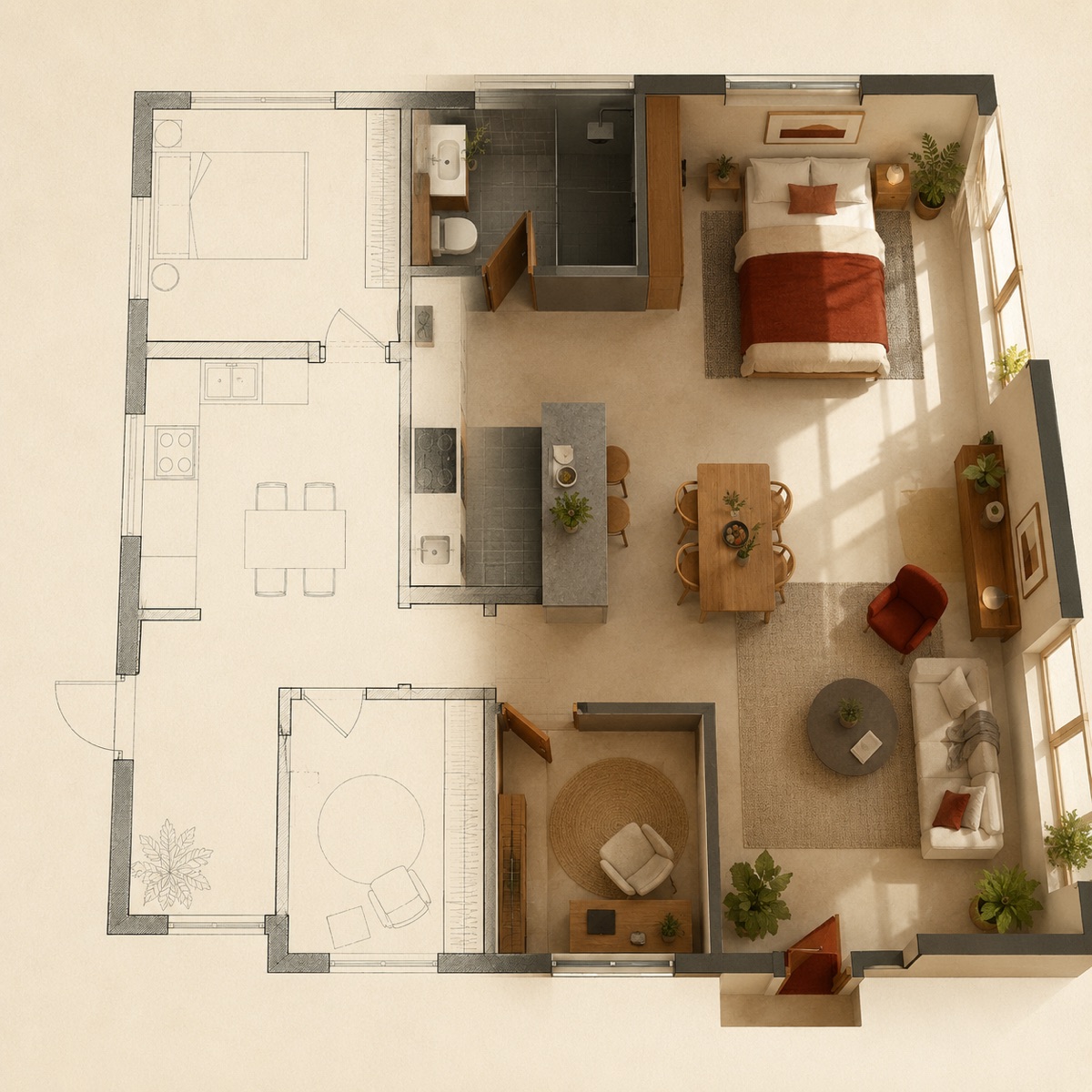
<p>And now, number three: a 59 m² apartment with a real second bedroom and a parking spot in the basement, in a new development just outside Oslo. I found it one lazy afternoon when I had nothing to do and was just browsing. Isn’t that always how the big decisions start? 😄</p>

<h3 id="why-i-keep-choosing-brand-new">Why I keep choosing brand new</h3>

<p><strong>1. I’m scared of oppussing.</strong> I have been to many visninger of older apartments. Everyone else sees “charming, with potential”. I see a bathroom from 1994 and a renovation project that will eat my savings and my evenings. With a new apartment, everything is untouched. The first shower in that bathroom is mine.</p>

<p><strong>2. No bidding war.</strong> When I bought in 2018, the market was crazy. Prices ran away every month, apartments went far over takst, and the bidding rounds were honestly painful to watch. New builds work differently: there is a price list, the price is fixed, first come first served. You never stand there at 11 in the morning, sweating, while someone outbids you by 50,000 kroner every five minutes.</p>

<p><strong>3. The secret nobody talks about: the waiting time is a savings plan.</strong> This is the biggest one, and I almost never see it explained. When I signed in 2018, I paid only a small deposit. The rest? Not due until takeover, three years later. I didn’t actually have enough equity for the bank at signing time, a dear friend helped me bridge the gap for the paperwork at the very start, and I paid her back right away. Then I had three whole years to save up the real thing, while my salary also grew. In practice, I reserved a 2021 apartment at a 2018 price, and used the construction time to become the person who could afford it. If I had needed all the money on day one, there would be no apartment.</p>

<p><strong>4. The boring but real money details.</strong> When you buy a used home in Norway, you pay 2.5% dokumentavgift on the whole price. On a new build, you pay it only on the land value. For my first apartment, the total purchase costs were under 13,000 kroner. On a similar used apartment, it would have been more like 65,000. And new builds come with a five-year guarantee from the builder, so if something is wrong, it is their problem, not mine.</p>

<h3 id="the-honest-downsides">The honest downsides</h3>

<p>I promised you honesty, so here it is.</p>

<p><strong>You pay a premium.</strong> New costs more per square meter than used, that is just true. I accept it as the price of no oppussing and no bidding stress.</p>

<p><strong>You might wait years.</strong> Three years, in my case. And there is a detail many people miss: when a project opens for sale, the developer usually needs to sell a certain share of the apartments before they are allowed to start building at all. In my first project it was 33%. If they don’t reach it, the project can be cancelled and you get your deposit back. So you are not just waiting for a building, you are first waiting to find out if there will even be a building.</p>

<p><strong>You might buy blind.</strong> My first apartment I bought purely from drawings, and I am honestly bad at imagining rooms from a floor plan. It was a blind buy. I was lucky: when I finally stood in it, it was bigger than I had imagined, with a really good layout. My second one also positively surprised me. But I know it could have gone the other way.</p>

<p><strong>The tilvalg trade-off.</strong> If you buy early, you can choose finishes and upgrades, called tilvalg. If you buy late or finished, those deadlines have expired and you get the standard delivery. Personally I don’t care, I have bad taste in art anyway, I just prefer white. Standard Norwegian delivery is completely fine to live with. But if you dream of your own kitchen colors, buy early.</p>

<h3 id="drawings-or-finished-the-market-decides-for-you">Drawings or finished? The market decides for you</h3>

<p>Here is something I only understood after three purchases across very different markets: you don’t really choose between buying from drawings and buying finished. The market chooses for you.</p>

<p>In hot years, like 2018, projects sell out on paper long before anyone starts digging. Everyone buys blind, because that is the only option. In slower years, like now, some apartments are still available after the building is finished, so you can walk through the actual rooms before signing. That is a much calmer feeling, I can tell you.</p>

<p>A slow market has another quiet advantage: developers become flexible. In my current purchase, the deposit requirement kept shrinking as the sales went slowly, until it basically disappeared. I’m not saying this is universal, it is not, but it shows that in a soft market, the terms are not as fixed as the price list looks.</p>

<h3 id="my-advice-for-what-its-worth">My advice, for what it’s worth</h3>

<p>If you are a foreigner in Norway dreaming about your own place: try to buy as soon as you realistically can. The rental market here is not like in many other countries, it is small and expensive, and renting long-term is rarely a good deal. Buying is paying to yourself. Renting is money you will never see again.</p>

<p>And your first apartment does not need to be the dream apartment in the dream location. Mine was 47 m² in a commuter town I left after two months. It was still the best financial decision I ever made, because it got me onto the ladder. Everything after that was just climbing.</p>

<p>This is part 1 of a little series about buying a home in Norway. Next up: what my 5.4 million kroner apartment actually costs, all the numbers nobody shows you. And someday soon, the story of how a foreigner saves up for that very first egenkapital.</p>

<p>So, tell me: would you dare to buy an apartment you have never seen, from a drawing? Or have you already done it? I would love to hear how it went. 👇</p>

<p><em>Disclaimer: I’m not a financial advisor and this is not financial advice. Everything I share is my personal experience from my own three purchases, and your situation may look completely different.</em></p>]]></content><author><name>Norway Life</name></author><category term="Life in Norway" /><summary type="html"><![CDATA[I have bought three apartments in Norway and every one was brand new. Why I skip bidding wars and renovation projects, how the waiting time became my savings plan, and the honest downsides of buying new.]]></summary><media:thumbnail xmlns:media="http://search.yahoo.com/mrss/" url="https://norway-life.com/images/2026/07/third-apartment-cover.jpg" /><media:content medium="image" url="https://norway-life.com/images/2026/07/third-apartment-cover.jpg" xmlns:media="http://search.yahoo.com/mrss/" /></entry><entry><title type="html">How Cancer Reshaped My Relationship with Money</title><link href="https://norway-life.com/2026/04/23/how-cancer-reshaped-my-relationship-with-money/" rel="alternate" type="text/html" title="How Cancer Reshaped My Relationship with Money" /><published>2026-04-23T21:10:08+02:00</published><updated>2026-04-23T21:10:08+02:00</updated><id>https://norway-life.com/2026/04/23/how-cancer-reshaped-my-relationship-with-money</id><content type="html" xml:base="https://norway-life.com/2026/04/23/how-cancer-reshaped-my-relationship-with-money/"><![CDATA[<figure class="wp-block-image size-large"><a href="/images/2026/04/relationship-with-money.jpg"><img data-attachment-id="3158" data-permalink="https://norway-life.com/2026/04/23/how-cancer-reshaped-my-relationship-with-money/relationship-with-money/" data-orig-file="/images/2026/04/relationship-with-money.jpg" data-orig-size="1024,1024" data-comments-opened="1" data-image-meta="{&quot;aperture&quot;:&quot;0&quot;,&quot;credit&quot;:&quot;&quot;,&quot;camera&quot;:&quot;&quot;,&quot;caption&quot;:&quot;&quot;,&quot;created_timestamp&quot;:&quot;0&quot;,&quot;copyright&quot;:&quot;&quot;,&quot;focal_length&quot;:&quot;0&quot;,&quot;iso&quot;:&quot;0&quot;,&quot;shutter_speed&quot;:&quot;0&quot;,&quot;title&quot;:&quot;&quot;,&quot;orientation&quot;:&quot;0&quot;,&quot;alt&quot;:&quot;&quot;}" data-image-title="relationship-with-money" data-image-description="" data-image-caption="" data-large-file="/images/2026/04/relationship-with-money.jpg" loading="lazy" width="1024" height="1024" src="/images/2026/04/relationship-with-money.jpg" alt="" class="wp-image-3158" srcset="/images/2026/04/relationship-with-money.jpg 1024w, /images/2026/04/relationship-with-money.jpg 150w, /images/2026/04/relationship-with-money.jpg 300w, /images/2026/04/relationship-with-money.jpg 768w" sizes="auto, (max-width: 1024px) 100vw, 1024px" /></a></figure>


<h3 class="wp-block-heading">Cancer didn&#8217;t change everything overnight. It was quieter than that.</h3>


<p class="wp-block-paragraph">In movies, a cancer diagnosis always comes with some big moment of clarity. The patient stares out the window, soft music plays, and suddenly they understand what really matters in life. They book a trip to Italy. They quit their job. They cry and laugh and donate all their savings to charity.</p>


<p class="wp-block-paragraph">That was not my experience.</p>


<p class="wp-block-paragraph">When you are in active treatment, you are often too tired and too sick to reflect on the meaning of anything. Some days were so hard that my brain had zero capacity left for existential thinking. I was just trying to get through the week. The deep thoughts came later, slowly, in the quieter moments between appointments.</p>


<p class="wp-block-paragraph">One of those thoughts was about money.</p>


<p class="wp-block-paragraph">Before I go further: I&#8217;m not writing this from a place of financial comfort. I&#8217;m a normal person with a normal salary living in an expensive city. I budget carefully because I have to. I have a mortgage and it&#8217;s a real weight. I&#8217;m not rich, I&#8217;m not even particularly comfortable. But I stopped obsessing over paying down debt as fast as possible, because I realized I was sacrificing the present for a future I wasn&#8217;t even sure would look the way I imagined. This post is just my personal reflection, not advice.</p>


<h3 class="wp-block-heading">The assumption buried in all financial advice</h3>


<p class="wp-block-paragraph">Most standard financial advice is built on one quiet assumption: that you will be healthy and functional long enough to enjoy the future you&#8217;re saving for.</p>


<p class="wp-block-paragraph">Invest now, enjoy later. Delay the nice holiday, wait for retirement. Suffer a little today for the bigger reward tomorrow.</p>


<p class="wp-block-paragraph">I used to find that reasonable. Now I find it a bit naive.</p>


<p class="wp-block-paragraph">Not because saving is wrong. Saving is fine. But the version of &#8220;save everything, enjoy nothing until later&#8221; stopped making sense to me once I understood, in a very personal way, that later is not guaranteed. And even if later comes, the version of you that arrives there might not be able to enjoy it the same way.</p>


<p class="wp-block-paragraph">My grandmother is living proof of this. She spent her whole life being careful with money, saving, not spending on herself, putting things off for later. She is now in her nineties. She has the money. But she doesn&#8217;t even remember anymore. Cognitive decline took that from her before she ever got the chance to enjoy what she saved. The window didn&#8217;t just close. It disappeared entirely.</p>


<p class="wp-block-paragraph">I think about her a lot when I make financial decisions now.</p>


<h3 class="wp-block-heading">What actually changed for me</h3>


<p class="wp-block-paragraph">My shift wasn&#8217;t dramatic. I didn&#8217;t suddenly become reckless with money. I still save. I still think before I spend. I&#8217;m not interested in buying things I don&#8217;t need or going into debt for the sake of &#8220;living in the moment.&#8221;</p>


<p class="wp-block-paragraph">But some things changed quietly.</p>


<p class="wp-block-paragraph">I travel more now. Within my actual budget, not borrowed money, but I stopped treating travel as a reward I had to earn first. If I want to go somewhere and I can afford it, I go. Life is short. My body is not guaranteed to be this functional forever. I know that now in a way I didn&#8217;t before.</p>


<p class="wp-block-paragraph">I spend more on experiences I used to think were too expensive. Concerts. Musicals. A nice dinner. Before, I would look at the ticket price and think &#8220;that&#8217;s a lot for one evening.&#8221; Now I think &#8220;that&#8217;s one evening I will actually remember.&#8221; The calculus changed.</p>


<p class="wp-block-paragraph">I spend more on good food. This sounds small but it isn&#8217;t. Eating well, cooking things I enjoy, not just the cheapest option every single time. My body went through a lot. Feeding it well feels like the least I can do.</p>


<p class="wp-block-paragraph">And I&#8217;m more generous with my family. More willing to pay for things, to treat people I love, to not overthink the cost when it comes to the people who matter.</p>


<h3 class="wp-block-heading">It&#8217;s not about spending more. It&#8217;s about spending intentionally.</h3>


<p class="wp-block-paragraph">I think the version of financial wisdom I&#8217;m describing gets misread sometimes as &#8220;just spend everything, you might die anyway.&#8221; That&#8217;s not it.</p>


<p class="wp-block-paragraph">It&#8217;s more like: I now have a clearer sense of what money is actually for. It&#8217;s not a score to maximize. It&#8217;s not something to hoard until some hypothetical perfect future. It&#8217;s a tool, and like any tool, it&#8217;s only useful if you actually use it.</p>


<p class="wp-block-paragraph">I still have savings. I still think about the future. I just stopped treating enjoyment as the thing I have to earn after all the responsible boxes are checked. Sometimes the concert is the responsible choice. Sometimes the trip is exactly the right use of money. Because experiences have an expiration date too, and it&#8217;s tied to your health, your energy, and the people you&#8217;d share them with.</p>


<p class="wp-block-paragraph">The suffering-now-for-later approach only makes sense if you&#8217;re confident about what later looks like. I&#8217;m not. And I&#8217;m not sure anyone really is.</p>


<h3 class="wp-block-heading">What I&#8217;d say to someone newly diagnosed</h3>


<p class="wp-block-paragraph">I wouldn&#8217;t give financial advice. That&#8217;s not my place and I&#8217;m genuinely not qualified.</p>


<p class="wp-block-paragraph">But I would say: give yourself permission to spend on things that make your life feel worth living right now. Not recklessly. Not stupidly. But without the guilt that comes from the idea that you should always be sacrificing today for tomorrow.</p>


<p class="wp-block-paragraph">Today is also your life. It counts too.</p>


<p class="wp-block-paragraph">Has a big life moment ever changed how you think about money? I&#8217;m curious whether this resonates, or whether you see it completely differently.</p>]]></content><author><name>Norway Life</name></author><category term="My unexpected journey" /><summary type="html"><![CDATA[Cancer changed how I think about money: why I stopped rushing to pay down my mortgage and started valuing the present. No movie moment, just slow honest lessons.]]></summary><media:thumbnail xmlns:media="http://search.yahoo.com/mrss/" url="https://norway-life.com/images/2026/04/relationship-with-money.jpg" /><media:content medium="image" url="https://norway-life.com/images/2026/04/relationship-with-money.jpg" xmlns:media="http://search.yahoo.com/mrss/" /></entry><entry><title type="html">Cancer Treatment in Norway: All the Financial Support I Got</title><link href="https://norway-life.com/2026/04/16/cancer-treatment-in-norway-all-the-financial-support-i-got/" rel="alternate" type="text/html" title="Cancer Treatment in Norway: All the Financial Support I Got" /><published>2026-04-16T21:58:13+02:00</published><updated>2026-04-16T21:58:13+02:00</updated><id>https://norway-life.com/2026/04/16/cancer-treatment-in-norway-all-the-financial-support-i-got</id><content type="html" xml:base="https://norway-life.com/2026/04/16/cancer-treatment-in-norway-all-the-financial-support-i-got/"><![CDATA[<p class="wp-block-paragraph">One of the most common questions I get, especially from readers in the US, is: &#8220;How do you afford cancer treatment?&#8221; And honestly, it&#8217;s a fair question. In the US, a cancer diagnosis doesn&#8217;t just affect your health, it can financially destroy you. Medical debt can lead one to bankruptcy there (I heard, I don&#8217;t know if it&#8217;s true). So I want to give a complete and honest picture of what it&#8217;s actually like to go through cancer in Norway from a financial and practical support perspective.</p>


<p class="wp-block-paragraph">Spoiler: Norway takes care of you pretty well. But it&#8217;s not perfect, and no one hands you a welcome package on day one explaining everything.

Note: this post focuses on financial and practical support. There&#8217;s a whole other side to this, like access to psychologists, sexologists, nutritionists, and more, and I&#8217;ll cover that in a separate post.</p>


<h3 class="wp-block-heading">How I found out about all of this</h3>


<p class="wp-block-paragraph">No one sat me down and walked me through all the support available to me. What happened was more organic. My kreftkoordinator (cancer coordinator) mentioned there was a &#8220;sosionom&#8221; at the hospital who could help me get a full picture of financial support and practical help. I never contacted her, because I already knew that cancer treatment in Norway is free and that my employer has a generous sick pay policy. So I felt covered.</p>


<p class="wp-block-paragraph">For the rest, I pieced it together from nurses, my oncologist, my GP, information flyers at the hospital, and HR at my company. It works, but it does require you to be proactive. If you&#8217;re going through treatment in Norway right now, I hope this post saves you some of that legwork.</p>


<h3 class="wp-block-heading">Hospital treatment: completely free</h3>


<p class="wp-block-paragraph">Let&#8217;s start with the big one. All hospital treatment is covered by the state. Chemotherapy, surgery, radiation, specialist consultations, none of it costs you anything. I went through EC chemotherapy, Taxol, surgery, 17 Phesgo sessions, and everything in between, all at Radiumhospitalet and Ullevål. Zero bills.</p>


<p class="wp-block-paragraph">Although Norway is not the only country in the world where healthcare is free, this could feel unreal to people from many other countries. And it should. It&#8217;s genuinely remarkable.</p>


<h3 class="wp-block-heading">Frikort: the free card that kicks in fast</h3>


<p class="wp-block-paragraph">For outpatient appointments (GP visits, some specialist consultations, certain tests) you normally pay an egenandel, a co-pay of around 300-400 NOK each time. But there&#8217;s a yearly ceiling. Once you&#8217;ve paid that total amount across all your appointments, you get a frikort (free card) and everything is free for the rest of the year.</p>


<p class="wp-block-paragraph">With cancer, you hit that ceiling fast. I don&#8217;t remember the exact amount in 2024, but with how many appointments I had in the first weeks after diagnosis, it didn&#8217;t take long at all. After that, the frikort takes care of itself. It&#8217;s digital now, linked to your personal number, so you don&#8217;t need to carry a physical card.</p>


<h3 class="wp-block-heading">Sykepenger: sick pay that actually replaces your income</h3>


<p class="wp-block-paragraph">If you can&#8217;t work due to illness, you&#8217;re entitled to sykepenger (sick pay). NAV, which is Norway&#8217;s national welfare and employment authority (think of it as a combination of Social Security, unemployment insurance, and social services all in one), covers up to 100% of your salary for up to 52 weeks. Your employer covers the first 16 days, then NAV takes over up to a ceiling of 6G (roughly 750,000 NOK in 2024).</p>


<p class="wp-block-paragraph">My employer has a more generous policy and covers my full salary regardless of the 6G cap, which made a big difference in not having to worry financially on top of everything else. But even the standard NAV rate is far better than what most countries offer.</p>


<p class="wp-block-paragraph">Practically, the process was easier than I expected. My doctor gives sick leave in 28-day periods (it&#8217;s roughly a month, and if it&#8217;s longer than that, NAV splits it into two or more periods anyway, meaning twice the paperwork). The reason that NAV splits periods which are more than 28 days is because they don&#8217;t want people who get sick pay directly from NAV have to wait too long between each payment. After each period ends, I get an SMS from NAV, log in to their website with my personal number, answer a few simple questions, and that&#8217;s it. My employer and NAV sort out the rest between themselves.</p>


<p class="wp-block-paragraph">One thing that did surprise me: if you want to travel outside the EU/EEA while on sick leave, you&#8217;re allowed up to 5 weeks per year without losing your sykepenger, but you have to apply and get approval before you travel. I found this out when I wanted to visit my family in a country outside the EU. Fine, I thought, I&#8217;ll apply. Less fine: the application has to be sent by post. Physical paper, envelope, stamp. In 2024. I don&#8217;t have a printer at home, so I went to my local NAV office to print it out, and luckily the people there were kind enough to send it for me so I didn&#8217;t have to find a post office and buy a stamp. A small thing, but a funny contrast to how smooth everything else was digitally.</p>


<p class="wp-block-paragraph">I&#8217;ll write a separate post about what it was actually like to work during treatment, but I&#8217;ll mention it briefly here: I tried to work as much as I could throughout treatment. So my sick leave periods were often partial, not full. Either way, the sykepenger system handled it.</p>


<h3 class="wp-block-heading">Pasientreiser: patient transport (in theory)</h3>


<p class="wp-block-paragraph">If you can&#8217;t use public transport to get to your appointments, you&#8217;re entitled to covered transport through Pasientreiser. This can mean a taxi, or reimbursement if you drive yourself or take public transport.</p>


<p class="wp-block-paragraph">I live in Oslo and all my treatment was at hospitals in Oslo, mostly Radiumhospitalet with some appointments at Ullevål. So I traveled by public transport for almost everything. Even after my egg harvesting, which, in hindsight, was not a smart decision.</p>


<p class="wp-block-paragraph">I only used Pasientreiser twice, and both times were underwhelming. The first was the day after my mastectomy. I had a drain still in, I&#8217;d had surgery less than 24 hours before, and I waited 1.5 hours for a taxi that already had two other patients in it. A shared ride. After major surgery. I also had to pay a co-pay of around 120 NOK. I remember thinking I could have just taken a Bolt or Uber, probably the same price, definitely private, definitely faster.</p>


<p class="wp-block-paragraph">The second time was after a small procedure under anesthesia. The nurse assured me it would be faster this time. It wasn&#8217;t. Exact same experience.</p>


<p class="wp-block-paragraph">The system exists and it&#8217;s good in principle, especially for people who live far from the hospital. But if you&#8217;re in a city and the timing matters, a private taxi might genuinely be the better choice.</p>


<h3 class="wp-block-heading">Wig support: yes, NAV covers this too</h3>


<p class="wp-block-paragraph">Hair loss is one of the most visible side effects of chemo, and NAV covers wig costs. For people over 30, the support is up to 6,265 NOK per year for a standard wig, or up to 16,220 NOK (I&#8217;m not sure what is the amount now) if you need a custom fit or real hair due to head shape or allergies.</p>


<p class="wp-block-paragraph">My tip: go to a wig shop that has an agreement with NAV. That way, you don&#8217;t pay the full price and wait ~11 weeks for reimbursement. You just pay the difference if the wig costs more than the NAV amount. Much simpler.</p>


<p class="wp-block-paragraph">I have a whole post coming about the wig experience, so I&#8217;ll leave it there for now.</p>


<h3 class="wp-block-heading">Egg freezing: fully covered</h3>


<p class="wp-block-paragraph">This one surprises a lot of people. Egg freezing before chemotherapy, to preserve fertility, is fully covered by the Norwegian health system when it&#8217;s medically necessary. I didn&#8217;t pay anything for it. I&#8217;ve written about the full experience: <a href="https://norway-life.com/2024/08/17/my-egg-freezing-journey-during-cancer-treatment-part-1/">Part 1</a> and <a href="https://norway-life.com/2024/08/22/my-egg-freezing-journey-during-cancer-treatment-part-2/">Part 2</a>.</p>


<h3 class="wp-block-heading">Montebellosenteret: cancer rehabilitation center</h3>


<p class="wp-block-paragraph">Montebellosenteret is a rehabilitation center for cancer patients who have finished primary treatment. They offer week-long stays with yoga, a heated pool, psychological support, group discussions, nutrition guidance, and mindfulness programs. You need a doctor&#8217;s referral, and there&#8217;s a co-pay of around 1,232 NOK per week. Travel is reimbursed by Helfo. You can go up to two weeks per year.</p>


<p class="wp-block-paragraph">I didn&#8217;t go. My honest reason: I was a little afraid of being surrounded by sick and depressed people, even though I was also sick, which I&#8217;m fully aware is both ironic and a little unfair to say. But that was my gut feeling, and I think a lot of people feel the same way even if they don&#8217;t say it out loud. It doesn&#8217;t mean it&#8217;s the wrong choice for everyone. For people who feel isolated or who need structured support after treatment, it sounds genuinely valuable.</p>


<h3 class="wp-block-heading">Grunnstønad and Hjelpestønad: extra allowances</h3>


<p class="wp-block-paragraph">Two more NAV allowances worth knowing about, even though I didn&#8217;t use either.</p>


<p class="wp-block-paragraph"><strong>Grunnstønad</strong> covers extra expenses caused by your illness that a healthy person wouldn&#8217;t have, things like transport costs, special skin care products needed due to treatment, or dietary needs. It&#8217;s paid as a fixed monthly amount.</p>


<p class="wp-block-paragraph"><strong>Hjelpestønad</strong> is for people who need personal care or assistance from someone else because of their illness, help with everyday tasks like washing, dressing, cooking.</p>


<p class="wp-block-paragraph">I heard about both but never applied. I was managing on my own and working through treatment. I was also told that someone from NAV or the local bydel would contact me to check if I needed any help at home. That call never came. So if you think you might need either of these, don&#8217;t wait for someone to reach out. Look into it yourself or ask the sosionom at the hospital.</p>


<h3 class="wp-block-heading">Kreftforeningen: the Norwegian Cancer Society</h3>


<p class="wp-block-paragraph">Kreftforeningen offers free counseling, support groups, practical help, and in some cases emergency financial support for cancer patients. I didn&#8217;t use their services directly, but I joined a Facebook group run by the community and found it really useful to read about other people&#8217;s experiences. It normalized a lot of what I was going through.</p>


<p class="wp-block-paragraph">If you need someone to talk to, or practical help I haven&#8217;t covered here, they&#8217;re worth reaching out to.</p>


<h3 class="wp-block-heading">The full picture</h3>


<p class="wp-block-paragraph">Norway takes care of its cancer patients. The treatment is free, the sick pay is solid, and the practical supports exist. If you&#8217;re reading this from the US or another country and going through cancer treatment, I genuinely wish you had access to what I have here.</p>


<p class="wp-block-paragraph">It&#8217;s not seamless. The pasientreiser taxi after surgery, the paper form I had to send by post, the NAV call that never came. But overall, I&#8217;ve been able to focus on getting through treatment without the financial panic that so many people have to deal with on top of everything else. That&#8217;s not nothing. That&#8217;s actually enormous.</p>


<p class="wp-block-paragraph"><em>A note on the numbers: everything here describes the rules and rates as they were when I went through treatment. These things change over time, so always check nav.no and helsenorge.no for the current rules.</em></p>


<p class="wp-block-paragraph"><em>I&#8217;m not a doctor and I won&#8217;t give any medical advice. All I share is my personal experience based on my own treatment plan.</em></p>


<p class="wp-block-paragraph">If you&#8217;re going through treatment in Norway or somewhere else, what has surprised you most about the support (or lack of it) available to you? I&#8217;d love to hear in the comments. 👇</p>]]></content><author><name>Norway Life</name></author><category term="My unexpected journey" /><category term="Life in Norway" /><summary type="html"><![CDATA[What cancer treatment actually costs in Norway: sick pay, the exemption card, free hospital care, and every financial support scheme that helped me.]]></summary><media:thumbnail xmlns:media="http://search.yahoo.com/mrss/" url="https://norway-life.com/images/norway-life-card.png" /><media:content medium="image" url="https://norway-life.com/images/norway-life-card.png" xmlns:media="http://search.yahoo.com/mrss/" /></entry><entry><title type="html">Ziextenzo – The Shot That Kept My Treatment on Track</title><link href="https://norway-life.com/2026/04/13/ziextenzo-the-shot-that-kept-my-treatment-on-track/" rel="alternate" type="text/html" title="Ziextenzo – The Shot That Kept My Treatment on Track" /><published>2026-04-13T13:52:39+02:00</published><updated>2026-04-13T13:52:39+02:00</updated><id>https://norway-life.com/2026/04/13/ziextenzo-the-shot-that-kept-my-treatment-on-track</id><content type="html" xml:base="https://norway-life.com/2026/04/13/ziextenzo-the-shot-that-kept-my-treatment-on-track/"><![CDATA[<p class="wp-block-paragraph">Every time I finished an <a href="https://norway-life.com/2026/04/11/ec90-the-red-devil-part-1-the-first-two-rounds/">EC90 session</a>, there was one more thing on the to-do list: a visit to my GP for a Ziextenzo injection. It had to happen within 24 to 48 hours after each chemo round, no skipping, no postponing. Four rounds of EC90 meant four of these visits.</p>


<p class="wp-block-paragraph">The timing was never convenient. After EC90, all I wanted was to go home and let my body recover in peace. But the injection could not happen right away either. Guidelines say at least 24 hours after chemo, and no later than 72 hours, so I had a narrow window to work with. When I first received my full EC90 treatment plan, the hospital handed me all four chemo dates at once. I immediately booked all four GP appointments for Ziextenzo in one go. Anyone who knows me knows I run a tight calendar at work, and treatment had become my full-time job now. Same rules applied. Get the dates, block the slots, done.</p>


<h3 class="wp-block-heading">What Ziextenzo Actually Does</h3>


<p class="wp-block-paragraph">Chemotherapy is aggressive not just on cancer cells but on your immune system too. It knocks down your neutrophils, the white blood cells responsible for fighting infection. If your counts drop too low before the next chemo round, treatment gets delayed. And delays matter. Keeping the schedule is part of keeping the treatment effective. Ziextenzo works by stimulating your bone marrow to produce more neutrophils quickly, essentially helping your body recover fast enough to stay on track.</p>


<h3 class="wp-block-heading">The Injection Itself</h3>


<p class="wp-block-paragraph">My GP gave me the injection in my belly, alternating sides each time. He mentioned I could self-inject at home if I wanted, and technically I had done belly injections before during my <a href="https://norway-life.com/2024/08/17/my-egg-freezing-journey-during-cancer-treatment-part-1/">egg freezing process</a>. But this felt different. That was a different chapter of my life, and I was doing those shots alone out of practicality. This time, I just felt safer having a professional do it. No strong reason I can put into words, it just felt right.</p>


<h3 class="wp-block-heading">The Side Effects: Bone Ache</h3>


<p class="wp-block-paragraph">The injection itself was very quick, barely noticeable. The side effect I had been warned about was bone ache, and I did get it. When the body is suddenly told to produce white blood cells rapidly, it puts pressure on the bones. The best way I can describe it is that deep, dull ache you feel after a day of very hard physical work. Not sharp, not unbearable, just there. It varied each time in how long it lasted, and I simply waited it out without any painkillers. I imagine the experience differs from person to person, so do not let it scare you if you are about to go through this.</p>


<h3 class="wp-block-heading">Did It Work?</h3>


<p class="wp-block-paragraph">What I never felt directly was Ziextenzo working. There was no moment where I thought, yes, this is doing something. But the proof showed up in my blood results every single time. My white blood cell counts were consistently good before each new EC90 round, and I never had a single treatment delay because of low counts. In cancer treatment, that kind of invisible win is actually everything. A delay is not just an inconvenience, it can affect how well the whole treatment works. The fact that I sailed through all four rounds on schedule, that was Ziextenzo doing its job quietly in the background.</p>


<p class="wp-block-paragraph"><em>Disclaimer: I&#8217;m not a doctor and I won&#8217;t give any medical advice. All I share is my personal experience based on my own treatment plan.</em></p>]]></content><author><name>Norway Life</name></author><category term="My unexpected journey" /><summary type="html"><![CDATA[After every chemo round came the Ziextenzo shot to protect my immune system. What it does, its side effects, and why the timing is so strict.]]></summary><media:thumbnail xmlns:media="http://search.yahoo.com/mrss/" url="https://norway-life.com/images/norway-life-card.png" /><media:content medium="image" url="https://norway-life.com/images/norway-life-card.png" xmlns:media="http://search.yahoo.com/mrss/" /></entry></feed>