After the operation, there was one part of my treatment plan left that I had barely thought about. Chemotherapy took most of my attention, the operation took the rest, and radiation was just a word at the end of the list.
If you read the last chapter, you might remember me stretching my arms over my head every day at home, slightly stressed about it. That was for this. To be radiated you have to lie with your arms raised above your head and stay still in that position, and after the operation that was not something my body simply did.
The talk and the planning scan
On 4 December I met the oncologist to talk about radiation: what it does, what it does to you, what to expect. The same day I also had the planning CT scan, which is the scan they use to map exactly where the radiation should go.
It was basically a dress rehearsal. I lay down on the machine exactly as if I were getting radiation, and they took pictures, which was the CT scan. I also practiced breathing in and out with the machine, which I did not understand the point of until later.
Two things surprised me that day.
The first was how quick it was. I had received an information sheet beforehand that made the planning appointment sound like a big procedure, and then it was over much faster than I had prepared for. I noticed this pattern through my whole treatment: the written information is always written for the worst version of the appointment.
The second was about markings. I had heard from other people that they draw on you, or give you small tattoos, so the machine can be lined up the same way every time. Nothing like that happened. They told me they don’t do that anymore, and I never had any marking on my skin at all.
The first session, and the strangest part of radiation
My first radiation was on 12 December.
And here is the thing I still find hard to explain to people: I did not feel anything. Not warmth, not tingling, not pain. Nothing at all. It took very little time and then it was over.
After months of chemotherapy, where every infusion announced itself in my body for days afterwards, this felt almost absurd. A treatment powerful enough to be part of curing cancer, and my body had no opinion about it.
The only thing I noticed was afterwards. I was tired. I went home and slept.
What a session was actually like
There are many radiation rooms at the hospital, but I always got the same one, though not always the same staff. The room was quite big. The whole routine was quick: I came in, took off my clothes (only the upper part), and lay down on the machine with my arms raised over my head. Sometimes the nurse adjusted my position if it was not quite right. (I never really knew what the exact profession of the people in there was, to be honest.)
Then I stayed as still as I could, which was not hard for me. The staff left the room and operated the machine from outside, and I followed their instructions: breathe in, hold, breathe out.
That breathing is not random. As I understand it, because my cancer was on the left side, it is done to protect the heart. When you take a deep breath in and hold it, your lungs fill up and the heart moves slightly away from the area being treated, so it gets a lower dose. It was not difficult for me to hold my breath, but I know that may not be the same for everyone. Each session took just a few minutes.
The rhythm that wore me down
In total I had 15 sessions. Radiation is given on weekdays, and there was no treatment on weekends or public holidays, which is why 15 sessions stretched from 12 December to 4 January.
The treatment itself was fine all the way. What was hard was everything around it.
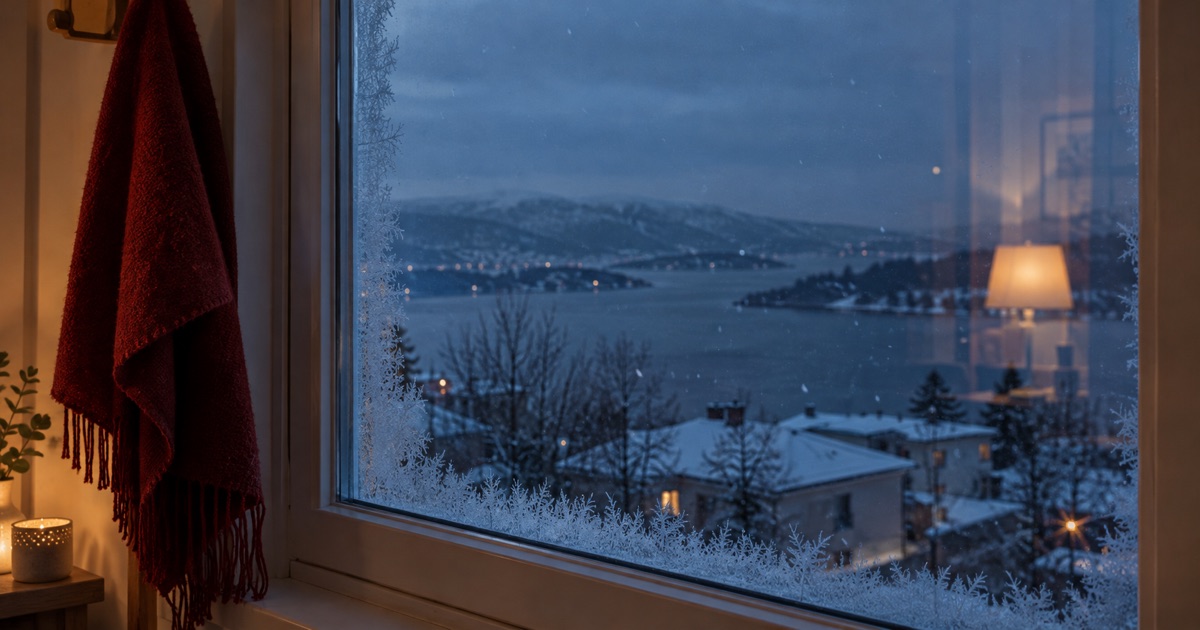
Here is the “stupid” part: this happened in the middle of a hard Norwegian winter. Dark, cold, snow. And all my sessions were at eight o’clock in the morning. That meant waking up very early every weekday, and taking a bus that was unreliable in winter, so I woke up even earlier in case it was late. At least it was one long trip without changing buses, so I could just sit and stay half asleep.
I was not working at that time, still on sick leave with only a few hours of work. And after chemo and the operation, all I wanted was to sleep longer in the morning, not drag myself out into the dark every single day.
I want to be careful, because “it was fine but I was tired” sounds like nothing. But it is a real part of cancer treatment that nobody warns you about. Chemotherapy is dramatic and everyone understands it. Radiation is a daily commute in the dark to a machine that does not hurt, over and over, until it is finished. It asks less of your body and more of your patience.
My skin, and the tiredness I can’t explain
I did not see any big changes. My skin changed very little, only some discoloration around the mastectomy scar and around the nipple. Honestly I don’t know how much of that was the radiation, because the skin on that side was never going to be the same as the other side after everything anyway.
Same with the tiredness. I did not feel more tired than before, I felt quite normal, but tired anyway. Maybe it came from the radiation, maybe it was just months of treatment piling up. I can’t separate them.
Christmas in an empty hospital
What I remember most from that period is not the machine. It is darkness and emptiness.
It was winter, it was Christmas time, and the hospital was quite empty because everything that is not urgent is postponed over the holidays. There were fewer staff, fewer patients, fewer people anywhere. I walked in through the dark in the morning to a quiet building, did my few minutes, and walked out again into more of the same.
Then it just stopped
My last session was on 4 January.
Nothing marked it. I just left. Afterwards I got the schedule for my follow-up checks, and that was it. No bell, no ceremony, nothing to say radiation was done. I don’t think ringing a bell is a thing in Norway, I have never seen it or read about it in the Norwegian patient groups.
I think I would have expected to feel more, honestly. But it fit the whole treatment somehow: it did not announce itself when it started, and it did not announce itself when it ended.
The part that came back later
There is one more thing I have to include, because it is the honest ending of this chapter.
When I chose to have an implant put in during the mastectomy (immediate reconstruction), I knew that radiation was coming afterwards, and I knew I might need another operation later. Radiation is one of the known risk factors for something called capsular contracture. Your body always forms a thin layer of scar tissue, a capsule, around an implant. Sometimes that capsule tightens and hardens, and radiation makes that more likely. In one study of women who had radiation after an implant reconstruction, nearly half developed some degree of it.
In April-May 2026, two years after my diagnosis, I had a check with the surgeon, and he confirmed that I have exactly that. The capsule around my implant has hardened, and my operated breast is very hard. It was not a surprise, and I would make the same choice again.
They can operate on me again if I want. There is no deadline, I can think about it and contact them whenever I want to talk about it. I haven’t decided. I don’t have pain, it is sometimes uncomfortable, but it does not bother me every day. And life keeps going with so many other things happening all the time that I honestly don’t have the mental space to think about another operation right now.
But it is a real reminder that treatments are not free just because you can’t feel them. The one I felt nothing from at all is the one that left the most lasting mark on my body.
What I would tell someone starting radiation
Based only on my own experience, with the big caveat that everyone reacts differently:
The treatment itself may be the easiest part of your whole cancer treatment to get through physically. Don’t brace for chemotherapy again, this is a different animal.
The difficulty, if it comes, is the grind. Daily, early, in the dark, when you are already tired from everything before. Plan for that instead: how you will get there, what to do about transport that does not work in winter, and who could come along for some of the trips if the schedule allows.
And if you feel guilty for finding the “easy” treatment hard, please don’t. Being tired for weeks in a row is genuinely tiring. It counts.
Did you go through radiation, and did you feel anything during it? And if it was in winter, did the dark mornings get to you too? I would really like to know if it was just me.
I’m not a doctor and I won’t give any medical advice. All I share is my personal experience based on my own treatment plan.